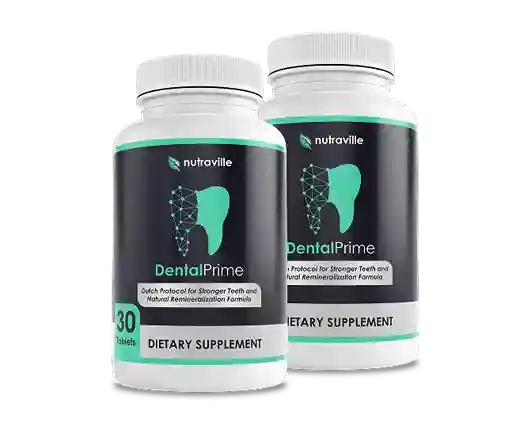
Every DentalPrime ingredient is broken down below: what it is, why it's in the formula, what the research actually shows, and an honest verdict — including where evidence is still preliminary.
Vitamin D3 (Cholecalciferol)
What it is: The form of vitamin D the body produces from sun exposure and absorbs most efficiently from food or supplements.
Why it's here: D3 is required for the intestine to absorb dietary calcium. Without adequate D3, calcium intake — including from hydroxyapatite in this formula — is far less available to the body in the first place.
Research: D3's role in calcium absorption and bone mineralization is well established; researchers studying vitamin D and K2 in tooth remineralization describe it as foundational to the nutrient signaling that supports enamel and dentin mineral content.
Verdict: Strong, well-established evidence for D3's general role in calcium metabolism; dental-specific outcome data is less extensive than the bone-health literature.
Vitamin K2 (Menaquinone-7)
What it is: A long-half-life form of vitamin K2, chosen over MK-4 because MK-7 stays active in circulation for hours rather than needing repeated daily doses.
Why it's here: K2 activates osteocalcin and matrix Gla protein, the two proteins responsible for binding calcium to hydroxyapatite in bone and teeth, and for keeping it out of soft tissue.
Research: Mechanistic studies show K2 supplementation enhances osteocalcin activation tied to enamel and dentin mineralization, and separate research finds K2 supports periodontal tissue by lowering inflammation. That said, a closer review of the field notes most dental-specific K2 evidence still comes from observational studies and mechanistic extrapolation rather than large randomized dental trials.
Verdict: The calcium-directing mechanism is well documented in bone biology; direct clinical trials measuring cavity or remineralization outcomes in humans are still limited, so claims here should stay mechanism-level, not "proven to remineralize teeth."
Calcium (Microcrystalline Hydroxyapatite Complex)
What it is: Calcium delivered in hydroxyapatite form — the same crystalline calcium-phosphate structure that makes up roughly 95% of tooth enamel — rather than as calcium carbonate or citrate.
Why it's here: Supplying calcium in the same mineral form the tooth is built from is the formulation's rationale for using hydroxyapatite specifically rather than a generic calcium salt.
Research: Hydroxyapatite is widely used in dental biomaterials research; studies on nanoparticle hydroxyapatite integration into demineralized enamel structures demonstrate its biocompatibility with tooth tissue, and hydroxyapatite toothpaste formulations have clinical trial support for remineralization when applied topically.
Verdict: Strong evidence for hydroxyapatite's biocompatibility and topical remineralization value; evidence for oral (swallowed) hydroxyapatite supplementation reaching teeth the same way topical application does is less direct.
Xylitol
What it is: A naturally occurring sugar alcohol, FDA-approved as a food ingredient since 1963, that most cavity-causing bacteria cannot metabolize for energy.
Why it's here: Xylitol is one of the most extensively studied anti-cavity nutrients outside of fluoride, historically delivered through gum but relevant as a supplement ingredient too.
Research: A 2025 systematic review found xylitol significantly reduced Streptococcus mutans counts in 12 of 14 clinical studies compared with a polyol control. Earlier foundational research, the Turku Sugar Studies, associated regular xylitol use with a large reduction in new cavities over two years versus a sucrose comparison group. A separate 2024 systematic review was more cautious, concluding that xylitol's preventative effect against dental caries specifically could not be conclusively confirmed across all included trials due to study heterogeneity.
Verdict: Consistent evidence that xylitol reduces cavity-causing bacteria; evidence for reduced cavities specifically is positive but less uniform across the full research base, and most trials used chewing gum rather than capsules.
Cranberry Powder
What it is: Powdered whole cranberry (Vaccinium macrocarpon), valued in oral research for its A-type proanthocyanidins (PACs).
Why it's here: Cranberry PACs are non-bactericidal — they don't kill oral bacteria outright, which helps preserve the resident oral microbiome — but they interfere with how cavity-causing bacteria stick to tooth surfaces and build biofilm.
Research: A review of cranberry polyphenols found A-type proanthocyanidins inhibit bacterial acid production, glucan synthesis, and adhesion to tooth surfaces without being bactericidal. A separate systematic review of cranberry extract on dental plaque concluded the evidence supports cranberry's potential to reduce plaque, while also noting the field still lacks standardized dosing across studies.
Verdict: Solid in-vitro and mechanistic evidence for anti-adhesion effects; human clinical trials using an oral cranberry supplement specifically (rather than mouth rinses or extracts applied directly) are still limited.
Zinc (as Zinc Citrate)
What it is: Zinc bound to citrate for solubility and absorption, one of the most studied zinc forms in oral care formulations.
Why it's here: Zinc citrate is the ingredient most directly tied to gum tissue and breath outcomes in this formula, rather than to tooth mineral content.
Research: A 2024 randomized double-blind trial found toothpaste containing 2% zinc citrate persistently improved gingival health and reduced gingivitis-associated bacteria in dental plaque over three months. Zinc is also recognized for neutralizing the volatile sulfur compounds responsible for oral malodor.
Verdict: Well-supported for gum health and breath outcomes — though the strongest trial evidence uses topical zinc citrate toothpaste rather than an ingested capsule, so results from a supplement may differ.