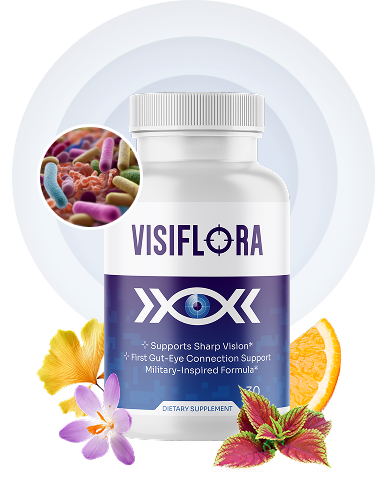
Visiflora's label lists 22 ingredients across four rough groups: carotenoids, antioxidant vitamins and minerals, circulatory botanicals, and gut-support compounds. Below, each major ingredient is explained on its own — what it is, why a formula like this includes it, and an honest verdict on the evidence behind it — separate from the "gut-eye" story the brand builds around them.
Established research
Lutein & Zeaxanthin
These carotenoids concentrate naturally in the macula, where they're thought to filter blue light and limit oxidative stress. They're the reason a formula like Visiflora exists at all: without a credible macular pigment ingredient, an eye supplement has little basis.
Verdict: Genuinely the best-supported ingredients here — the NIH-funded AREDS2 trial found that substituting lutein and zeaxanthin for beta-carotene was at least as effective at slowing progression to advanced age-related macular degeneration, with less lung-cancer risk for smokers. That trial used specific doses (10 mg lutein / 2 mg zeaxanthin) in people already at risk of AMD — it did not test Visiflora, and Visiflora's own per-capsule amounts aren't fully disclosed.
Traditional use
Bilberry Extract
A relative of the blueberry, bilberry has a long folk history tied to WWII pilots who believed it sharpened night vision. It's included here for its anthocyanin antioxidant content.
Verdict: The night-vision story is largely anecdotal. Small human trials on bilberry and visual function exist but are limited in size and quality, so it's fair to call this a traditional, antioxidant-supporting ingredient rather than a proven vision enhancer.
Early evidence
Astaxanthin
A marine carotenoid derived from algae, prized for its antioxidant strength. Formulas like Visiflora include it as an additional defense against oxidative stress in eye tissue.
Verdict: Some small studies suggest astaxanthin may ease eye fatigue and support accommodation (focusing ability) during screen use, but the evidence base is thinner and less consistent than lutein/zeaxanthin's.
Circulatory support
Ginkgo Biloba
A botanical extract used across many "circulation support" supplements, included here under the theory that better ocular blood flow supports retinal health.
Verdict: Ginkgo has a genuine research history for circulation broadly, with mixed results for eye-specific outcomes. It can also thin the blood, which matters for anyone on anticoagulants — see the safety section below.
Antioxidant vitamins
Vitamin C, Vitamin E, Zinc
These three are part of the original NIH AREDS formula alongside beta-carotene, included for their antioxidant and structural role in eye tissue.
Verdict: Reasonably well-supported at AREDS-level doses in an at-risk AMD population. Whether Visiflora's undisclosed amounts match those studied doses isn't something the label confirms.
Emerging concept
Taurine, Grape Seed Extract, Quercetin, Rutin
This group is where Visiflora's "gut-eye barrier" marketing concentrates. Taurine is genuinely present in high concentration in retinal tissue; grape seed, quercetin and rutin are polyphenol antioxidants marketed here for vascular and gut-barrier support.
Verdict: Taurine's role in the retina is real biology, but the specific "gut-eye barrier" framing used in Visiflora's marketing is a brand concept, not an established clinical mechanism with human trial support in this context.