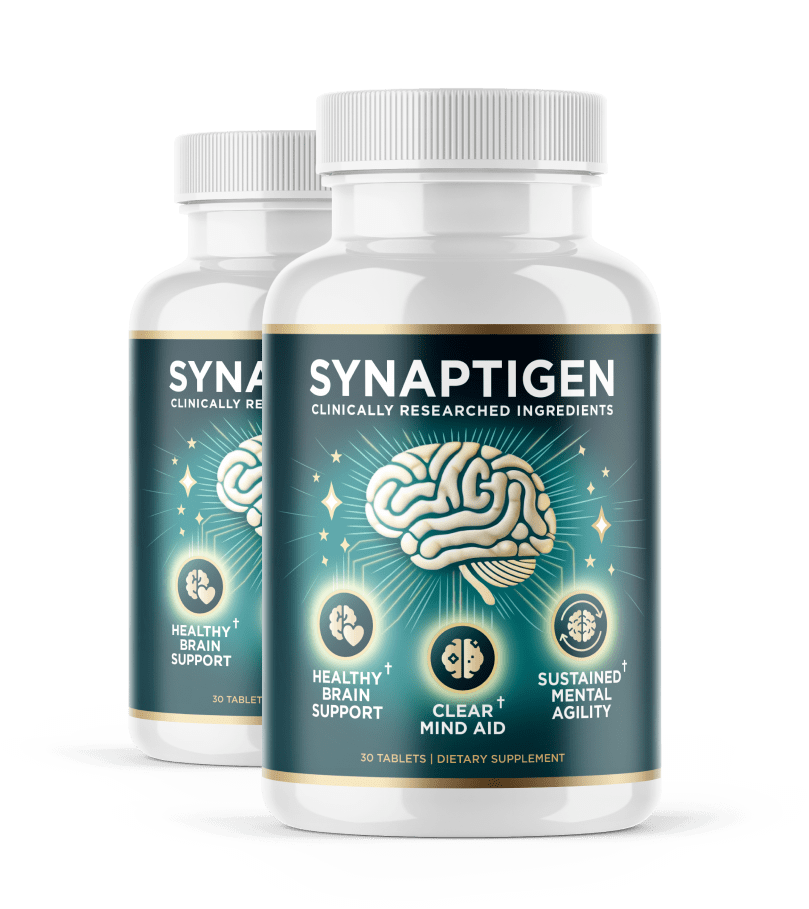
Inside the formula
What ingredients are in Synaptigen?
Synaptigen contains twelve ingredients, each included for a specific role in supporting brain cell communication, protection, or repair. Below, we explain what each one is, why it's in the formula, and how strong the underlying research actually is — including where the evidence is still limited.
Neurotransmitter support
Citicoline (CDP-Choline)
What it is: Citicoline is a naturally occurring compound that the body converts into choline and cytidine, both of which are used to build and maintain neuron membranes and support the neurotransmitter acetylcholine.
Why it's in Synaptigen: Choline availability tends to decline with age, and adequate choline supply is linked to healthy memory and cell-membrane repair. Citicoline is included as the formula's primary "raw material" ingredient for neuron maintenance.
What the research shows: A randomized, double-blind, placebo-controlled trial found that 12 weeks of citicoline supplementation improved overall memory performance, particularly episodic memory, in healthy older adults with age-associated memory impairment. A broader systematic review and meta-analysis of seven studies in people with mild cognitive impairment, Alzheimer's disease, or post-stroke dementia found a consistent positive effect of citicoline on cognitive function, though the review noted the underlying evidence quality was mostly low to moderate. Not every trial agrees — a systematic review found citicoline's effect on attention was less consistent than its effect on memory and behavior.
Verdict: Among the twelve ingredients, citicoline has some of the more consistent human clinical data behind it for memory support, mainly in older adults — though the effect sizes reported are generally modest rather than dramatic. Learn more about choline's role in the brain via the
NIH Office of Dietary Supplements.
Traditional nootropic herb
Bacopa Monnieri
What it is: Bacopa monnieri is an herb long used in Ayurvedic medicine, standardized in most supplements to its bacoside content.
Why it's in Synaptigen: Bacopa is one of the most-studied herbal nootropics for learning and memory retention, which is why it's positioned in Synaptigen as a long-term "brain training support" ingredient rather than something felt immediately.
What the research shows: A meta-analysis of trials using standardized Bacopa extracts found improved performance on tests of cognitive processing speed and reaction time, and a randomized controlled trial in people with age-associated memory impairment found significant improvement in mental control, logical memory, and paired-associate learning after 12 weeks. That said, the evidence isn't unanimous: a more recent randomized trial in adults with self-reported memory and attention problems found Bacopa did not outperform placebo on cognitive tests, though it did reduce stress and fatigue, and a 2025 review described results across studies as inconsistent, calling for more standardized clinical research.
Verdict: Bacopa's reputation for memory support is grounded in real trials, but results are mixed across studies — it appears to work best with consistent use over 8–12+ weeks, and it may do more for stress reduction than for measurable memory gains in every study.
B-complex
Vitamin B6, Vitamin B9 (Folate) & Vitamin B12
What it is: Three essential B vitamins the body cannot produce on its own and must get from diet or supplementation.
Why it's in Synaptigen: These three vitamins work together to metabolize homocysteine, an amino acid that, at elevated levels, has been associated with cognitive decline and vascular strain in the brain. They're included as a foundational "housekeeping" layer beneath the more specialized nootropic ingredients.
What the research shows: The link between elevated homocysteine and cognitive aging is well documented in nutrition research, and B6, B9, and B12 are the primary nutrients the body uses to keep homocysteine in a healthy range. Deficiency in any of the three is independently associated with nerve and cognitive symptoms, which is why they're considered foundational rather than optional in most brain-health formulas.
Verdict: These are "foundation" ingredients rather than a novel edge — if you're already getting enough B vitamins from diet, the added benefit will be smaller, but for anyone running low, correcting that gap is one of the more well-supported nutritional interventions for brain health.
Antioxidant / circulation
Maritime Pine Bark Extract
What it is: An extract of the bark of the maritime pine tree, rich in proanthocyanidins (often standardized as Pycnogenol).
Why it's in Synaptigen: Oxidative stress is one of the mechanisms linked to age-related neuron damage, and pine bark extract is included largely for its antioxidant profile and its studied effects on vascular function, which supports blood flow to the brain.
What the research shows: Pine bark extract has a substantial body of research around cardiovascular and circulatory endpoints, with a smaller but growing set of studies looking specifically at cognitive outcomes in adults, generally reporting improvements in attention-related measures alongside markers of oxidative stress.
Verdict: Solid antioxidant and circulation credentials, with cognition-specific research still catching up — it's a reasonable supporting ingredient rather than the formula's centerpiece.
Neurogenesis support
Lion's Mane Mushroom
What it is: Hericium erinaceus, a medicinal mushroom containing compounds called hericenones and erinacines.
Why it's in Synaptigen: Lion's Mane is included because its active compounds are among the few natural substances studied for stimulating nerve growth factor (NGF), a protein involved in maintaining and repairing neurons — a mechanism distinct from the other ingredients in the formula.
What the research shows: Erinacine A, one of Lion's Mane's key compounds, has been shown in research to cross the blood-brain barrier and increase nerve growth factor levels, promoting neurogenesis and neuronal survival. In humans, cognitive effects have been mixed across small, short-duration clinical trials, though a 16-week randomized trial in older adults with mild cognitive impairment found significant cognitive improvement at 750 mg/day, with benefits fading after supplementation stopped.
Verdict: A genuinely novel mechanism (nerve growth support rather than neurotransmitter modulation), but the human evidence base is still smaller than for more established nootropics like citicoline or Bacopa — worth including, not yet a slam dunk on its own.
Structural lipid
Phosphatidylserine
What it is: A phospholipid that's a core structural component of neuron cell membranes.
Why it's in Synaptigen: As a literal building block of brain cell membranes, phosphatidylserine is included to support the physical structure that neurotransmitter receptors sit in — the theory being that healthier membranes support better signal transmission and recall.
What the research shows: A double-blind, placebo-controlled multicenter trial in nearly 500 elderly patients with cognitive decline found statistically significant improvements in behavioral and cognitive parameters compared to placebo, and a systematic review and meta-analysis concluded phosphatidylserine had a positive effect on memory in older adults with cognitive decline.
Verdict: One of the better-supported ingredients on this list for memory recall specifically, particularly in older adults with existing memory complaints — less data exists for healthy younger adults.
Calming focus
L-Theanine
What it is: An amino acid found naturally in tea leaves, known for promoting a calm, alert mental state.
Why it's in Synaptigen: L-theanine is included to counterbalance the formula — where other ingredients aim at building or protecting neurons, L-theanine's role is regulating the stress response so that focus doesn't come at the cost of anxiety or jitteriness.
What the research shows: L-theanine is one of the more consistently replicated ingredients in nutrition research for promoting relaxed alertness, largely through its association with alpha brain-wave activity, and it's frequently paired with caffeine in research (though Synaptigen's formula is stimulant-free) because of its calming, anti-jitter profile.
Verdict: A dependable, low-risk addition for mood and calm focus rather than a memory-enhancer in its own right — its job in this formula is balance, not headline benefits.
Stress-performance
L-Tyrosine
What it is: An amino acid the body uses as a precursor to dopamine and norepinephrine.
Why it's in Synaptigen: Tyrosine is included because catecholamine neurotransmitters like dopamine can become depleted under acute stress or sleep loss, and tyrosine supplementation has been studied specifically for maintaining cognitive performance during demanding conditions.
What the research shows: Research on tyrosine consistently points to a specific niche: performance under stress, cold exposure, sleep deprivation, or multitasking demands, rather than a general-purpose memory or IQ boost in low-stress conditions.
Verdict: Useful specifically for demanding, high-stress mental tasks — don't expect it to do much on an easy, low-stress day, which is a fair way to think about its role in this formula.
Structural fat
Omega-3 Fatty Acids
What it is: Essential fats (commonly DHA and EPA) that the body cannot synthesize on its own in meaningful amounts.
Why it's in Synaptigen: DHA in particular is a major structural component of neuron membranes, especially at synapses, and adequate omega-3 intake is one of the more consistently discussed nutritional factors in long-term brain health research.
What the research shows: Omega-3 fatty acids have decades of nutritional research behind their role in cardiovascular and cognitive health, with DHA specifically implicated in membrane fluidity and synaptic function; population studies associate higher omega-3 status with better long-term cognitive outcomes, though supplementation trials in already-healthy people show more mixed short-term results.
Verdict: A foundational, well-established nutrient for brain structure over the long run — its benefit is more about steady maintenance than a fast, noticeable effect.
Circulation
Ginkgo Biloba
What it is: An extract from one of the oldest living tree species, widely used in traditional and modern herbal medicine.
Why it's in Synaptigen: Ginkgo is included primarily for its studied effects on cerebral blood flow — the idea being that better circulation delivers more oxygen and nutrients to support the other ingredients' work.
What the research shows: Ginkgo biloba is recognized in the research literature for its ability to enhance cerebral perfusion, protect against oxidative damage, and support synaptic plasticity, and it remains among the most widely studied botanicals for age-related cognitive support, with a long track record of clinical use in several countries.
Verdict: A well-established circulation-focused ingredient with a long research history — most useful as a supporting player for blood flow rather than a standalone memory solution.
Adaptogen
Rhodiola Rosea
What it is: A root long used in traditional medicine across Scandinavia and Russia, classified as an adaptogen.
Why it's in Synaptigen: Rhodiola is included for its studied effects on mental fatigue and stress resilience — a different lever than the neurotransmitter- and structure-focused ingredients, aimed at how well the brain performs under pressure over a long day.
What the research shows: A double-blind, cross-over study of physicians during night duty found that a standardized Rhodiola extract reduced mental fatigue and improved measures like short-term memory, concentration, and calculation speed compared to placebo. Research summaries describe Rhodiola as capable of improving cognitive function, reducing mental fatigue, and offering antioxidative and neuroprotective effects, though much of the mechanistic detail still comes from preclinical rather than large human trials.
Verdict: Genuinely useful for fatigue and stress-related mental performance dips — think "keeps you sharp on a hard day" more than "makes you smarter."
Mineral foundation
Magnesium
What it is: An essential mineral involved in hundreds of enzymatic reactions throughout the body, including many in the nervous system.
Why it's in Synaptigen: Magnesium is included as a broad nervous-system foundation ingredient — it's required for normal nerve signal transmission and is one of the more common shortfall nutrients in modern diets, so its inclusion supports the rest of the formula rather than acting as a standout ingredient on its own.
What the research shows: Magnesium's role in nerve conduction, relaxation, and sleep quality is well established in nutrition science, and low magnesium status has been associated with poorer stress tolerance and disrupted sleep — both of which indirectly affect next-day focus and memory.
Verdict: Not a flashy nootropic, but a legitimately important baseline mineral — its main job here is making sure a common nutritional gap isn't holding back everything else in the formula.