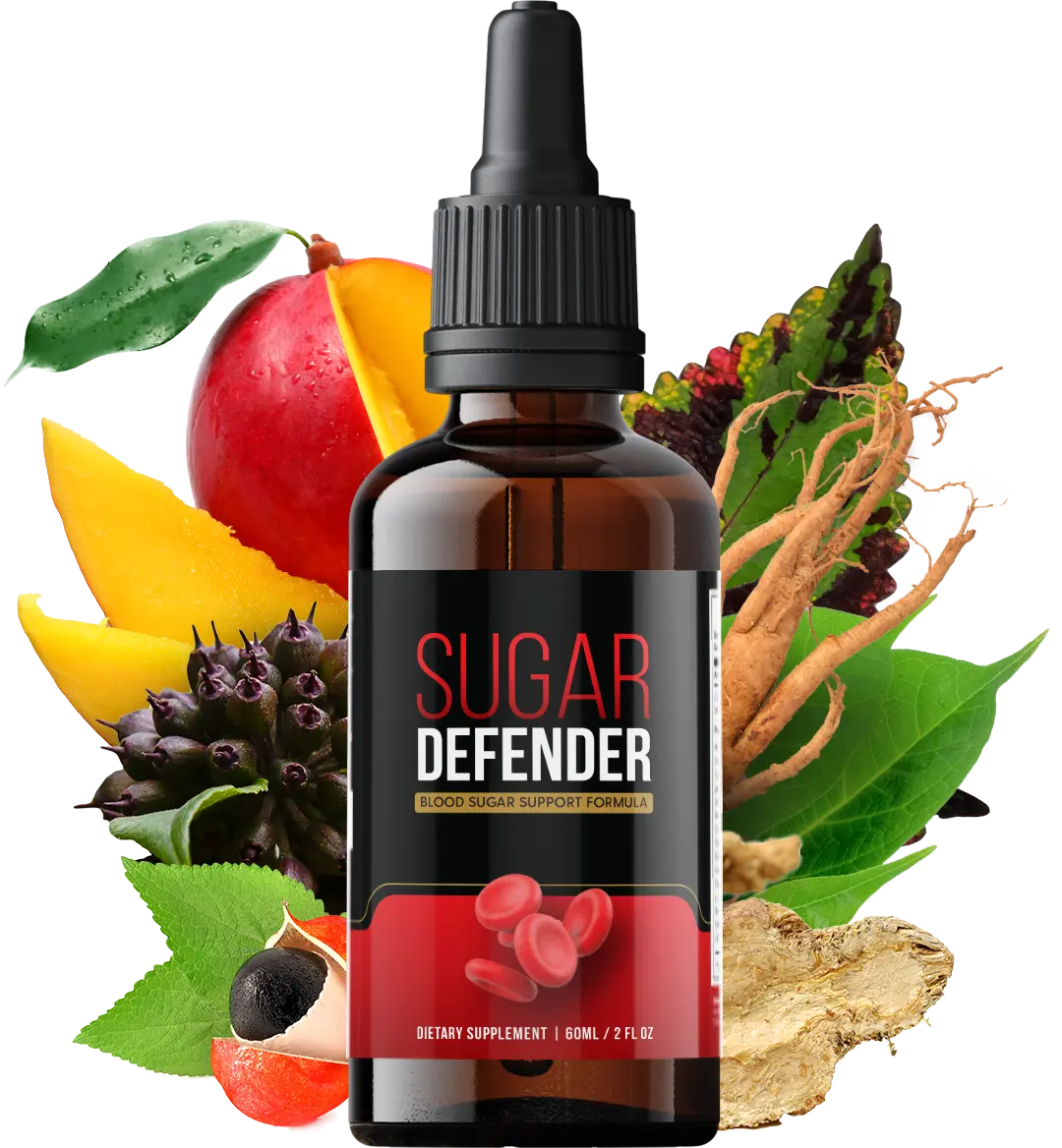
Eleuthero (Siberian Ginseng)
An adaptogenic root traditionally used to support energy and resilience to stress. It's included here for its energy-support reputation rather than a direct, well-established blood sugar effect.
Liquid Blood Sugar & Energy Support
Sugar Defender is a liquid dietary supplement made from a blend of plant extracts and minerals, marketed for daily blood sugar and energy support. It is not a medication, and it has not been evaluated by the FDA to diagnose, treat, cure, or prevent diabetes or any other disease.
This page walks through what's publicly known about the Sugar Defender formula, how each listed ingredient is typically studied on its own, realistic pros and cons, and safety questions worth asking before you buy — written plainly, without the hype.
At a Glance
The quick overview of Sugar Defender covers its form, ingredient category, intended use, and who it's marketed toward, so you can decide in under a minute whether it's worth reading further.
| Product name | Sugar Defender |
|---|---|
| Format | Liquid oral drops, taken with a dropper |
| Ingredient category | Blend of botanical extracts and minerals (e.g. eleuthero, chromium, gymnema, ginseng) |
| Marketed use | Daily blood sugar and energy support |
| Marketed toward | Adults looking for a plant-based addition to their blood sugar routine |
| Regulatory status | Dietary supplement; not FDA-approved or evaluated as a treatment |
| Where sold | Primarily through the official website; see our note on third-party sellers below |
Definition
Sugar Defender is a liquid dietary supplement that combines several plant extracts and trace minerals into one daily dropper, positioned as a natural addition to a blood sugar and energy routine rather than a medical treatment.
Unlike prescription medications for diabetes, Sugar Defender is regulated in the United States as a dietary supplement, a category the FDA does not pre-approve for safety or effectiveness before it reaches shelves. That distinction matters: manufacturers can make general "structure/function" claims (like "supports healthy blood sugar already in a normal range"), but they cannot legally claim the product treats, cures, or prevents diabetes, and neither can this page.
Public information about the company behind Sugar Defender is limited, which is common in the direct-to-consumer supplement space but still worth knowing going in. We recommend reading the label and manufacturer disclosures on the official Sugar Defender order page directly rather than relying solely on third-party summaries, including this one.
Positioning
Sugar Defender stands out mainly because of its liquid delivery format and its use of a multi-ingredient herbal blend rather than a single isolated compound — not because of any independently verified clinical results.
Drops can be added to water or taken directly, which some people find easier to fit into a routine than swallowing capsules. Liquid supplements are often marketed as absorbing faster, though this varies by ingredient and isn't guaranteed to translate into a stronger effect.
Rather than one active compound, Sugar Defender combines several botanicals and minerals. That's common in the wellness category, but it also means the finished blend itself hasn't been independently tested as a whole — only individual ingredients have research behind them, discussed below.
As a supplement, Sugar Defender can be purchased without a prescription. That accessibility is a draw for some people, but it's also why it should never substitute for prescribed diabetes treatment.
The brand states its drops are made in the United States in a facility following GMP guidelines and free of major allergens and GMOs. These are manufacturer claims; we'd encourage verifying current certifications on the official site before purchasing.
Formula
Sugar Defender's publicly listed formula centers on a small group of well-known botanicals and minerals, each with its own separate body of research — research on the individual ingredient, not on the Sugar Defender blend itself.
An adaptogenic root traditionally used to support energy and resilience to stress. It's included here for its energy-support reputation rather than a direct, well-established blood sugar effect.
An essential trace mineral involved in how the body processes carbohydrates and responds to insulin. Chromium is one of the more studied nutrients in this category, with NIH fact sheets noting it plays a role in macronutrient metabolism, though evidence on supplementation improving blood sugar in people without a deficiency is mixed.
An herb used for centuries in traditional Ayurvedic medicine — its Hindi name roughly translates to "sugar destroyer." Early research has explored its effect on sugar absorption and cravings, though large, rigorous human trials are still limited.
A Peruvian root vegetable more commonly associated with energy, mood, and hormonal balance than blood sugar specifically. Its role here appears to be general wellness support rather than a glucose-targeted ingredient.
A plant in the mint family whose extract, forskolin, has been studied mainly for metabolism and weight-related outcomes, with some exploratory interest in blood sugar and blood pressure support.
Seed extract from Irvingia gabonensis, most often marketed for weight management. Any blood sugar connection is generally framed as secondary to its metabolic and appetite effects.
A caffeine-containing seed used for an energy boost. Worth noting for anyone sensitive to stimulants or already consuming caffeine elsewhere in the day.
A widely used adaptogen with a long research history touching on energy, immune function, and glucose metabolism, though results across studies vary by ginseng species and dose.
This section summarizes general, publicly available research on each ingredient class. It does not describe clinical trials of the finished Sugar Defender product, which we could not find independently verified evidence for. Always check the current label, since supplement formulas can change.

Mechanism
Sugar Defender is meant to work by combining several ingredients that each target a different piece of metabolic health — mineral cofactors for insulin function, botanicals linked to sugar absorption, and adaptogens for energy — rather than through one single mechanism.
Chromium is positioned as the mineral backbone of the formula, supporting the body's normal response to insulin. This is the most conventionally supported mechanism in the blend, though its real-world effect size is modest for people who are not chromium-deficient.
Gymnema Sylvestre is the ingredient most directly tied to reducing sugar cravings and, in some research, blunting sugar absorption in the gut. This is the closest thing the formula has to a targeted "blood sugar" mechanism.
Eleuthero and ginseng are adaptogens, a category of herbs studied for helping the body respond to physical and mental stress. Chronic stress can affect blood sugar indirectly, so the logic here is supportive rather than a direct glucose mechanism.
Coleus forskohlii and African mango lean toward metabolism and weight-related outcomes. Since excess body weight is a known risk factor for blood sugar issues, this is framed as an indirect, longer-term contribution rather than an immediate effect.
Put together, the formula's logic is additive rather than singular: no one ingredient is positioned as a cure, and the combined blend itself has not been independently trialed as a finished product to our knowledge. Diet, physical activity, sleep, and prescribed medication remain the primary, evidence-backed levers for blood sugar management.
Honest Take
The pros and cons of Sugar Defender come down to a convenient liquid format and a research-backed mineral (chromium) weighed against limited transparency, a mostly proprietary blend, and the absence of independent clinical trials on the finished product.
Purchasing
Sugar Defender is sold primarily through its official website; we'd be cautious about listings on general marketplaces, since third-party sellers sometimes list unrelated or reformulated products under similar names.
Pricing, bundle sizes, and any money-back guarantee are set by the manufacturer and can change without notice. Check the current offer, refund policy, and shipping terms on the official order page before you buy.
Tip: compare the listing you're viewing against the official site's current price and bottle count. If a marketplace listing looks unusually cheap or is from an unfamiliar seller, that's worth double-checking before purchase.
Safety
Sugar Defender's individual ingredients are generally recognized as safe for most healthy adults in typical amounts, but several of them can interact with blood sugar medication or cause mild side effects, so a doctor's input matters before starting.
This is general safety information, not medical advice. Sugar Defender is not intended to diagnose, treat, cure, or prevent diabetes or any other disease. Talk to a doctor or pharmacist before starting any new supplement, especially if you take medication or manage a chronic condition.
Questions
Sugar Defender is not FDA approved, and no dietary supplement is. Supplements are regulated differently from drugs in the United States: manufacturers are responsible for safety and label accuracy, but the FDA does not review or approve them before they go on sale.
There's no verified timeline for Sugar Defender specifically, since it hasn't been independently trialed as a finished product. General supplement guidance suggests giving any formula several weeks of consistent use, alongside diet and activity changes, before drawing conclusions — and tracking your blood sugar with a doctor's guidance rather than by how you feel.
Only under a doctor's supervision. Several ingredients in Sugar Defender can affect blood sugar, and combining them with insulin or other glucose-lowering drugs raises the risk of hypoglycemia. Never stop or adjust a prescribed medication because of a supplement.
Yes. The formula includes guarana, a caffeine-containing seed. If you're sensitive to caffeine or already consuming it elsewhere in the day, factor that into when and how much you take.
Sugar Defender is not marketed or evidenced as a standalone weight-loss product. Ingredients like African mango and coleus forskohlii are studied for metabolic and weight-related outcomes, but the formula is not a substitute for diet, exercise, or medical weight management.
Background Reading
The broader research on blood sugar management consistently points to diet quality, physical activity, sleep, and prescribed medication as the strongest levers, with individual supplement ingredients like chromium and gymnema playing at most a modest, supportive role.
Organizations such as the CDC and American Diabetes Association point to a consistent set of evidence-backed strategies for blood sugar management: consistent carbohydrate intake, regular physical activity, adequate sleep, stress management, and, where prescribed, medication adherence. Supplement ingredients are generally studied as potential add-ons to these habits, not replacements for them.
Within that context, chromium and gymnema sylvestre are the two Sugar Defender ingredients with the most direct research ties to glucose metabolism, though study quality and results vary. Adaptogens like ginseng and eleuthero have broader research bases touching on energy and stress, with glucose-related findings that are less consistent. This is a useful frame for setting realistic expectations: a supplement blend like this may be a reasonable complement to established habits, not a substitute for them.
This section is general educational content summarizing publicly available health guidance. It is not a review of clinical trials on the Sugar Defender product itself, and it is not medical advice.