
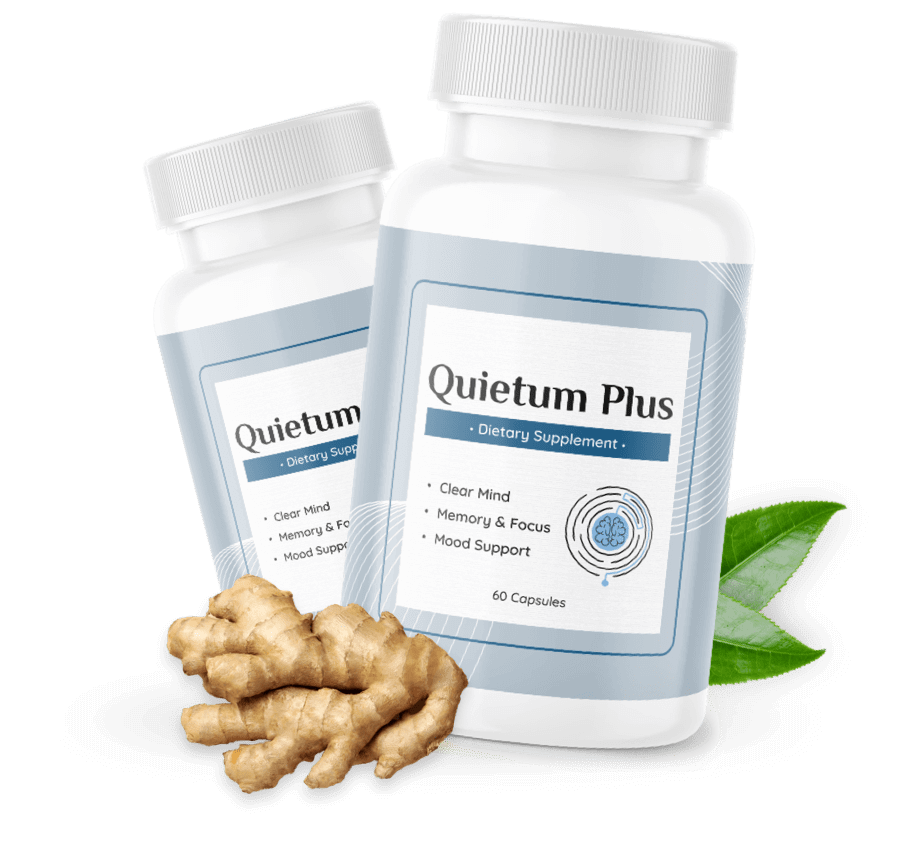
Bottle of Quietum Plus ear and hearing support supplement capsules on a light blue background

Ear & Auditory Wellness Supplement

Quietum Plus

A plain-language look at what's actually in the bottle and what the research says

Quietum Plus is a capsule supplement sold for ear and hearing wellness, built around a mix of plant extracts, amino acids, and a few vitamins and minerals rather than any drug ingredient. Before you order a bottle, it's worth knowing what's in it, how the maker says it works, and how that lines up with what hearing researchers have actually found.

This page walks through the ingredients, the proposed mechanism, safety considerations, and current pricing, then compares all of it against the clinical guideline that governs how doctors are told to treat tinnitus.

Visit Official Website

Dietary supplements are not evaluated by the FDA for safety or effectiveness before sale. This page is educational and contains affiliate links.

Quietum Plus at a glance

The essentials before you read further.

ProductQuietum Plus — ear and auditory wellness capsule supplement
FormatCapsules, typically 2 per day, 60 capsules per bottle (30-day supply)
Core ingredientsMucuna pruriens, maca root, ashwagandha, epimedium, tribulus terrestris, dong quai, muira puama, catuaba, damiana, ginger, zinc, L-tyrosine, B-vitamins
Claimed mechanismSupports the nerve and blood-flow pathway between the ear and brain (the "brain-ear axis")
Clinical trials on the finished productNone published
ManufacturingMade in the USA in an FDA-registered, GMP-certified facility (a facility standard, not a product approval)
Where to buyOfficial order page only — view current pricing
Refund windowCommonly advertised as 60 days — confirm current terms at checkout

What is Quietum Plus?

Quietum Plus is a dietary supplement, not a medicine: it's regulated by the FDA as a food product, which means the manufacturer does not have to prove it works before selling it. The capsules combine botanical extracts long used in traditional herbal medicine, such as mucuna pruriens and ashwagandha, with a smaller set of standard nutrients like zinc and B-vitamins.

The company positions Quietum Plus around ear and hearing wellness, but if you read the actual supplement facts panel, the formula looks closer to a general vitality and adaptive-stress blend than a hearing-specific one — several of its core ingredients (dong quai, tribulus terrestris, muira puama) are more commonly studied for hormonal balance or libido than for the ear. That's not necessarily disqualifying, since circulation and nerve-support ingredients can theoretically play a supporting role in auditory health, but it does mean the "ear supplement" framing is more marketing category than mechanism of action.

Reported ingredient lists for Quietum Plus have also shifted across production batches. If you order a bottle, treat the panel printed on that bottle as the accurate one rather than any list published on a review site, including this one.

What makes Quietum Plus different from other ear supplements?

Three things separate it from the typical ginkgo-and-zinc formula that dominates this category.

An adaptogen-forward formula

Most ear supplements lean on ginkgo biloba and zinc. Quietum Plus instead centers adaptogenic and traditional-medicine botanicals (ashwagandha, maca, mucuna pruriens), which is a different evidence base entirely — one built mostly around stress response and neurotransmitter precursors rather than cochlear blood flow.

No stimulants or synthetic fillers claimed

The label is marketed as free of artificial colors, flavors, and stimulant compounds, which matters for anyone sensitive to caffeine-adjacent "energy" ingredients sometimes found in vitality blends.

What's actually in Quietum Plus?

Every component below is examined for why it's likely included, what research actually exists for it, and a plain verdict — not just a marketing description.

Mucuna Pruriens
Amino-acid precursor

Why it's there: Mucuna pruriens is a legume naturally rich in L-DOPA, the direct chemical precursor to dopamine. It's included on the theory that healthy dopamine signaling supports the auditory cortex, the part of the brain that interprets sound signals from the ear.

What the evidence shows: L-DOPA's role in dopamine synthesis is well established pharmacologically, and mucuna pruriens is genuinely used in Parkinson's disease research for that reason. Its specific effect on hearing or tinnitus, however, hasn't been tested in a published human trial.

Verdict: Real biochemistry, unproven for hearing specifically.
Maca Root
Adaptogen

Why it's there: Maca is a Peruvian root used traditionally to support energy and hormonal balance. In a formula like this, it's most likely included as a general vitality and stress-adaptation ingredient rather than for any ear-specific action.

What the evidence shows: Small human trials link maca to modest effects on mood and energy; none look at hearing or tinnitus outcomes.

Verdict: Reasonable general-wellness ingredient, no auditory evidence.
Ashwagandha
Adaptogen

Why it's there: Ashwagandha is one of the better-studied adaptogens, with research on cortisol reduction and sleep quality. Chronic stress and poor sleep can make existing tinnitus feel louder, so the logic here is indirect: calmer stress response, less perceived ringing.

What the evidence shows: The stress and sleep research is comparatively solid for an herbal ingredient. The tinnitus-perception link is a reasonable hypothesis, not a demonstrated outcome.

Verdict: Good general evidence, plausible but untested for tinnitus.
Epimedium (Horny Goat Weed)
Circulatory botanical

Why it's there: Epimedium contains icariin, a compound studied for supporting nitric oxide production, which relaxes blood vessels. The inclusion logic is that better circulation could bring more oxygen to the tiny blood vessels feeding the inner ear.

What the evidence shows: Icariin's vascular effects are studied mostly in the context of erectile function and general blood flow, not cochlear circulation. No inner-ear human data exists.

Verdict: Circulatory rationale is biologically plausible; ear-specific proof is missing.
Tribulus Terrestris & Dong Quai
Traditional hormonal-support botanicals

Why they're there: Both are staples of libido and hormone-balance formulas — dong quai in particular is a mainstay of traditional women's-health blends. Their presence here is the clearest sign that this formula was adapted from a general vitality or hormonal-support base rather than designed from the ground up for hearing.

What the evidence shows: Some trial data exists for hormonal and sexual-health endpoints; essentially none exists connecting either ingredient to hearing or tinnitus outcomes.

Verdict: Off-target for an "ear supplement" claim; worth knowing before you buy specifically for hearing.
Muira Puama, Catuaba & Damiana
Traditional South American botanicals

Why they're there: All three appear in traditional Brazilian herbal medicine, typically marketed for mood, libido, and general vitality rather than for any organ-specific effect.

What the evidence shows: Human research on all three is sparse and mostly small or industry-funded. None addresses hearing.

Verdict: Traditional-use ingredients with thin modern evidence, unrelated to hearing mechanisms.
Zinc & B-Vitamins
Micronutrients

Why they're there: Zinc deficiency has been loosely associated with tinnitus in some older observational studies, and B-vitamins support general nerve function, which is why both show up across almost every ear-supplement formula on the market.

What the evidence shows: This is the one place where a real clinical guideline weighs in directly — and it recommends against relying on zinc for tinnitus, discussed in the research section below.

Verdict: Common inclusion, but the leading clinical guideline specifically advises against it for this use.

How does Quietum Plus claim to work?

The marketing mechanism is built around what's sometimes called the "brain-ear axis" — the idea that hearing depends on a healthy nerve and blood-flow connection between the cochlea and the auditory cortex, not just the ear itself. Here's that argument broken into its component claims.

Step 1 — Support circulation to the inner ear

The cochlea relies on an extremely small, delicate blood supply. The formula's circulatory botanicals (epimedium, tribulus) are positioned to widen blood vessels and improve oxygen delivery to that area. This is a real physiological pathway in general vascular biology, but it hasn't been measured directly in the human inner ear using these specific ingredients.

Step 2 — Support the auditory nerve pathway

Amino-acid ingredients like mucuna pruriens and L-tyrosine are positioned as raw material for neurotransmitters involved in how the brain processes sound signals sent from the ear. Again, the underlying neurochemistry is legitimate; its specific effect on auditory signal processing in humans taking this formula is not demonstrated.

Step 3 — Lower stress-related sound sensitivity

Ashwagandha and other adaptogens target the body's stress response. Because stress and poor sleep are known to make tinnitus feel more intrusive, calming that response is a plausible way to reduce how bothersome ringing feels, even if it doesn't change the underlying ear physiology.

Step 4 — Fill common micronutrient gaps

Zinc and B-vitamins round out the formula as general nutritional support, on the premise that a deficiency in either can contribute to nerve and hearing complaints. This step is only relevant if you're actually deficient in these nutrients to begin with; supplementing above adequate levels doesn't add benefit.

Every step above describes a plausible biological pathway. None of them has been tested together, in this formula, in a published clinical trial. Plausible mechanism is not the same as demonstrated outcome — that distinction is the difference between an interesting theory and clinical evidence.

What are the Quietum Plus benefits and drawbacks?

Weighed honestly, without inflating either column.

Potential upsides

  • Plant-and-nutrient formula with no stimulants or reported synthetic fillers
  • Ingredients are individually studied (if not for hearing specifically), so the safety profile of most components is reasonably well characterized
  • Simple two-capsule daily routine with no prescription required
  • Sold with a money-back guarantee window in most current listings, which lowers the financial risk of trying it
  • May offer general adaptogenic or stress-related benefits independent of any hearing claim

Real drawbacks

  • No published clinical trial on the finished Quietum Plus formula itself
  • The leading clinical guideline on tinnitus specifically advises against relying on dietary supplements, including zinc, for this condition
  • Several core ingredients are better evidenced for hormonal or libido effects than for hearing
  • Ingredient lists have varied across production batches and across the many mirror sites selling it, which makes label consistency hard to verify from outside
  • Priced at a premium relative to buying individual, well-studied ingredients separately

Where can you buy Quietum Plus, and what does it cost?

Quietum Plus is sold directly through its official order page rather than general retailers, and per-bottle pricing typically drops on multi-bottle packages. Because promotions change and unauthorized mirror sites exist, the order page itself is the only reliable source for the current price and any active bundle offer.

1 bottle
30-day supply

The standard starting option for trying the formula at full per-bottle price.

3 bottles
90-day supply

Lower cost per bottle, aimed at the length of time most listings suggest for evaluating results.

6 bottles
180-day supply

The lowest advertised per-bottle cost, intended for longer-term use.

Visit Official Website

Quietum Plus side effects and safety

Widespread or severe adverse events have not been documented for Quietum Plus in the available literature, and its ingredients are generally recognized as food-grade. That said, "no serious reports" is not the same as "no risk," particularly for a multi-botanical blend that hasn't been through formal safety trials.

A few interactions are worth knowing about specifically:

  • Thyroid and hormone-sensitive conditions: dong quai and tribulus terrestris can have mild hormonal activity and are generally advised against for anyone with a hormone-sensitive condition.
  • Blood pressure or blood-thinning medication: several circulatory botanicals in the formula could theoretically compound the effect of blood-pressure or anticoagulant medication.
  • Upcoming surgery: as with most multi-herb supplements, it's commonly recommended to stop at least two weeks before a scheduled procedure.
  • Pregnancy and breastfeeding: several ingredients (dong quai, tribulus, mucuna pruriens) are not established as safe in pregnancy and are generally avoided.

If you take prescription medication, are pregnant or nursing, or have a diagnosed medical condition, talk to a doctor before adding Quietum Plus or any similar supplement to your routine. This page is educational, not medical advice.

Quietum Plus FAQs

Straight answers to the questions people search before buying.

What is Quietum Plus?

Quietum Plus is a dietary supplement sold in capsule form and marketed for ear and auditory wellness. It's built from botanical extracts, amino acids, and a small set of vitamins and minerals, and, like all dietary supplements, it is regulated as a food rather than a medicine, so it has not been evaluated by the FDA for treating any hearing condition.

Does Quietum Plus work for tinnitus or hearing loss?

There is no published clinical trial on Quietum Plus as a finished product. The main clinical guideline on tinnitus care, issued by the American Academy of Otolaryngology-Head and Neck Surgery, specifically advises clinicians against recommending dietary supplements — including zinc, ginkgo, and melatonin — for persistent, bothersome tinnitus. Individual ingredients in the formula have their own separate research, covered above, but that doesn't equal proof the combined product treats tinnitus or hearing loss.

What are the main ingredients in Quietum Plus?

Commonly reported ingredients include mucuna pruriens, maca root, ashwagandha, epimedium, tribulus terrestris, dong quai, muira puama, catuaba, damiana, ginger, zinc, L-tyrosine, and a small B-vitamin blend. Formulas have varied across batches, so the panel on the bottle you actually receive is the most accurate source.

Is Quietum Plus safe to take?

Quietum Plus is formulated from ingredients generally considered food-grade, and no widespread serious adverse events are documented. It can, however, interact with thyroid, blood pressure, blood-thinning, or hormone-related medications and conditions, so anyone in those categories, or who is pregnant or nursing, should check with a doctor first.

How much does Quietum Plus cost?

Quietum Plus is sold through its official order page with per-bottle pricing that decreases on multi-bottle packages. Exact current pricing and any promotion should be confirmed on the order page itself, since it changes over time.

What actually helps with tinnitus, if not supplements?

The interventions with the strongest evidence are not pills: a hearing aid evaluation when tinnitus accompanies measurable hearing loss, sound therapy or masking, and cognitive behavioral therapy for the distress tinnitus causes. Those are the approaches the clinical guideline actually recommends, in direct contrast to dietary supplements.

Quietum Plus research: what the science actually says

This is the section most product pages skip, and it's the one that matters most before you spend money on any ear supplement, including this one.

In 2014, the American Academy of Otolaryngology-Head and Neck Surgery Foundation published the first multidisciplinary, evidence-based clinical practice guideline for tinnitus. After reviewing the available trial data, the guideline's development panel made an explicit recommendation: clinicians should not recommend ginkgo biloba, melatonin, zinc, or other dietary supplements for treating persistent, bothersome tinnitus. That's a category-level judgment, not a rejection of one ingredient — ginkgo biloba, the most heavily studied supplement in this space, was named specifically because it was tested properly in multiple trials and still didn't hold up.

Set against that backdrop, a formula like Quietum Plus faces a high bar. Its individual ingredients each have some research behind them, described ingredient-by-ingredient above, but almost none of that research was conducted on hearing or tinnitus outcomes, and none of it was conducted on this specific combination at this specific dosage. A biologically plausible mechanism, built from real biochemistry, is a reasonable starting hypothesis for a supplement company — it is not the same evidentiary bar as a controlled trial showing the finished product improves hearing or reduces ringing in real patients.

What does have a strong evidence base for tinnitus specifically: a comprehensive audiologic exam to rule out treatable causes, a hearing aid evaluation when hearing loss accompanies the tinnitus, sound therapy or masking devices, and cognitive behavioral therapy for the distress the ringing causes. None of those require a supplement purchase, and all of them are the interventions clinical guidelines actually endorse.

None of this means Quietum Plus is unsafe or that its ingredients are worthless — several have genuine, if general, wellness research behind them. It means the specific claim "this supplement will fix your hearing or stop your tinnitus" is not supported by the kind of evidence that would let a clinician make that recommendation.

Keep learning about ear and hearing health

For readers who want to go deeper than a single product page, these are good next stops.

Understanding tinnitus

The National Institute on Deafness and Other Communication Disorders explains what causes ringing in the ears and how it's typically diagnosed.

The clinical guideline in full

Read the complete AAO-HNS tinnitus practice guideline for the full list of what's recommended and what isn't.

Ingredients explained

Revisit the ingredient-by-ingredient breakdown above for the research behind each component of the Quietum Plus formula.

Safety before you buy

If you take medication or have a health condition, read the side effects and safety section before ordering.