
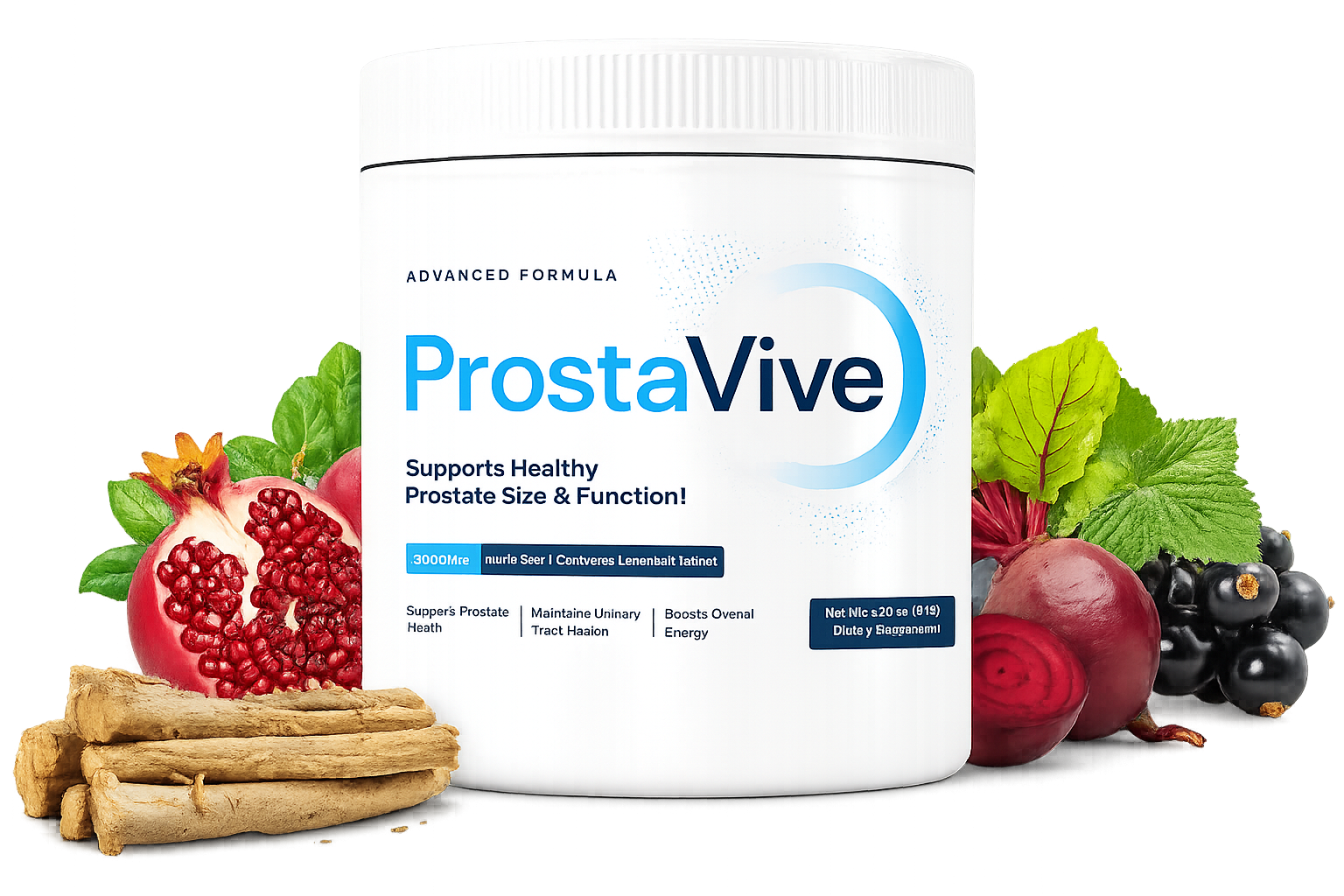

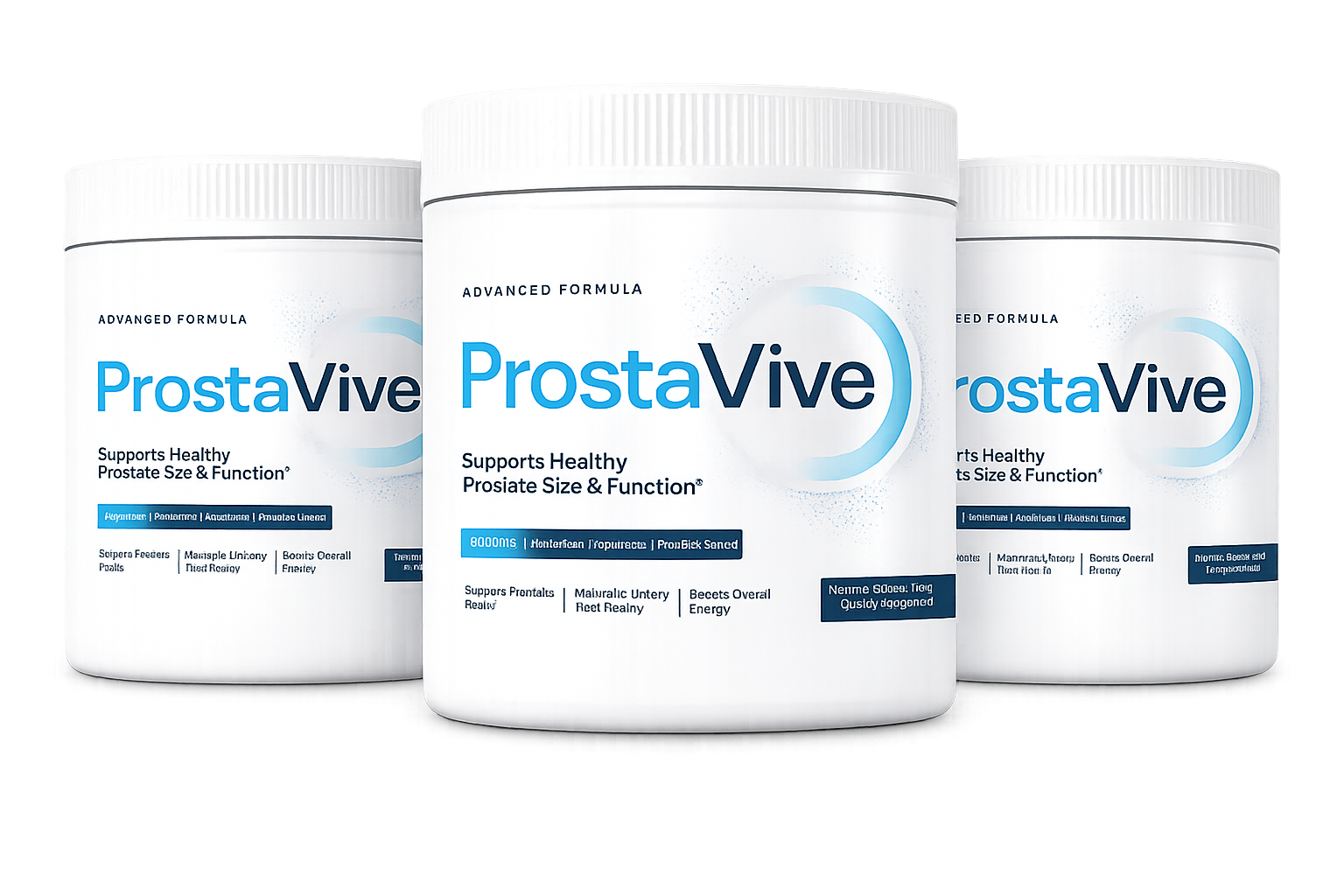
Prostavive prostate health supplement powder bottle on a light background

Product Guide & Ingredient Review

Prostavive

A plain-language, research-checked look at what's in it and what it's meant to do

Prostavive is a powdered dietary supplement marketed for prostate and urinary support in men, built around eleven ingredients — including nettle root, zinc, boron, and Tongkat Ali — mixed with water or a beverage once daily. This page walks through exactly what's in the formula, why each ingredient is typically included in prostate-support products, and — most importantly — what the published research actually says about each one, not just what the marketing claims.

We're not going to tell you Prostavive cures anything. Supplements aren't drugs, and BPH (the enlarged-prostate condition most of these ingredients target) is a medical issue worth discussing with a doctor. What we can do is give you an honest, sourced breakdown so you can decide for yourself whether this formula makes sense for you.

Powder blendMixed with water, once daily
30 servingsPer bottle
11 ingredientsHerbs, vitamins & minerals
GMP / FDA-registeredManufacturing facility

At a Glance

Prostavive Quick Overview

The short version, before we get into the detail.

Product nameProstavive
CategoryProstate & urinary support supplement (powder)
Core ingredientsNettle root, zinc, boron, Tongkat Ali, ashwagandha, maca root, Panax ginseng, fenugreek, vitamin D, vitamin B6, magnesium
FormatPowder, mixed with water or a beverage
Bottle contents30 servings per bottle (one month at the labeled dose)
ManufacturingGMP-certified, FDA-registered facility (facility registration is not the same as FDA approval of the product)
Best evidence forNettle root and zinc have the most direct human research tied to urinary symptoms
Thinnest evidence forTongkat Ali, maca, and artichoke extract, where prostate-specific human data is essentially absent

Definition

What Is Prostavive?

Prostavive is a dietary supplement, not a medication, sold as a daily powder aimed at men managing common age-related prostate and urinary concerns, such as needing to urinate more often at night. It combines eleven ingredients — a mix of herbs (nettle root, Tongkat Ali, ashwagandha, maca, Panax ginseng, fenugreek), minerals (zinc, boron, magnesium), and vitamins (D, B6) — rather than relying on a single active compound. Like all dietary supplements sold in the U.S., it has not been evaluated by the FDA for safety or effectiveness before going to market, and it is not intended to diagnose, treat, cure, or prevent any disease.

The company frames its approach around supporting healthy blood flow to the prostate, rather than the saw-palmetto-centric formulas that dominate the category. Whether that framing is a meaningful clinical distinction or mostly marketing differentiation is something we dig into below.

Positioning

Why This Formula Stands Out

01

It skips saw palmetto and pygeum — the two most-studied BPH botanicals — in favor of a broader hormone- and circulation-focused blend.

02

It includes nettle root and zinc, the two ingredients in the formula with the most direct clinical-trial support for urinary symptoms.

03

Several ingredients (Tongkat Ali, maca, ashwagandha, ginseng) target energy, libido, and stress hormones more than the prostate gland itself — worth knowing if prostate symptoms specifically are your main concern.

04

It's manufactured in a GMP-certified, FDA-registered facility and comes with a stated 180-day money-back guarantee, which lowers the financial risk of trying it.

The Formula, Ingredient by Ingredient

Prostavive Ingredients: What Each One Actually Does

For every ingredient: what it is, why it's typically included in a prostate formula, what the research shows, and our honest verdict on the strength of that evidence.

Nettle Root

Urtica dioica

Why it's here: Nettle root is one of the oldest folk remedies for urinary complaints in men, and Germany's Commission E formally recognizes it for difficulty urinating in early-stage BPH.

What the research shows: A 2022 randomized trial in BPH patients found nettle root extract, added to standard treatment, reduced urinary frequency, urgency, and nighttime bathroom trips — though it didn't change prostate size or PSA. Earlier trials are mixed: a large Iranian crossover trial and a 100-patient double-blind study both reported meaningful symptom improvement, while a smaller trial combining nettle with pygeum found effects no better than placebo. A systematic review of five trials (1,128 patients) found nettle extract outperformed placebo on symptom scores and flow rate.

Verdict: The most evidence-backed ingredient in this formula for urinary symptoms specifically — genuinely supported by multiple randomized trials, though results aren't unanimous and it works on symptoms rather than shrinking the prostate. Reasonably supportive

Zinc

Mineral

Why it's here: The prostate gland naturally concentrates zinc far above the levels found in any other soft tissue in the body, and zinc is involved in regulating the enzyme that converts testosterone into DHT — a hormone tied to prostate growth.

What the research shows: Marketing materials often cite "zinc deficiency causes BPH," but the actual research is more complicated. A 2016 meta-analysis found serum zinc was lower in prostate cancer patients but higher in BPH patients compared to healthy men — the opposite of a simple deficiency story. Reviewers describe findings on zinc and prostate tissue as "highly contradictory," even while agreeing zinc's biological role in the gland is significant.

Verdict: Biologically important and worth having at adequate levels, but the "low zinc causes an enlarged prostate" narrative oversimplifies genuinely mixed data. Mixed evidence

Boron

Trace mineral

Why it's here: Boron affects circulating steroid hormone levels, and lab studies have shown it can selectively affect prostate cancer cells, which is why it shows up in prostate-focused formulas.

What the research shows: Two smaller case-control studies (comparing boron intake in men with and without prostate cancer) found higher dietary boron associated with meaningfully lower cancer risk. But the largest and most rigorous study — a prospective cohort of over 35,000 men (the VITAL study) — found no association between boron intake and prostate cancer risk at all. That's an important, often-omitted detail in supplement marketing.

Verdict: Genuinely mixed at the population level, with the strongest study design (the large prospective cohort) failing to confirm the effect that smaller studies suggested. Mixed evidence

Tongkat Ali

Eurycoma longifolia

Why it's here: A traditional Southeast Asian herb studied mainly for its effect on testosterone, energy, and libido in aging men.

What the research shows: Small clinical trials suggest modest testosterone increases in men with low-normal levels, along with self-reported gains in energy and stamina. We could not find human trials examining Tongkat Ali's effect on prostate tissue, urinary symptoms, or BPH specifically — its inclusion here is extrapolated from its hormonal effects, not tested directly on the prostate.

Verdict: Reasonable evidence for testosterone and energy support; no direct evidence for prostate or urinary outcomes. Prostate-specific evidence lacking

Ashwagandha

Withania somnifera

Why it's here: An adaptogenic herb studied for lowering cortisol and supporting sleep and stress resilience, framed in prostate formulas as supporting the hormone balance that indirectly affects the gland.

What the research shows: Ashwagandha has reasonably solid trial evidence for reducing perceived stress and cortisol, and some smaller studies show modest testosterone increases. Direct research on ashwagandha and prostate tissue or urinary symptoms is not established.

Verdict: Solid general evidence for stress and sleep; its prostate benefit here is a reasonable but untested extrapolation. Prostate-specific evidence lacking

Maca Root

Lepidium meyenii

Why it's here: A Peruvian root traditionally used for libido and energy, included here for general male vitality rather than prostate tissue itself.

What the research shows: Small trials show modest improvements in sexual desire and mild erectile-function benefits. There is no meaningful direct research connecting maca to prostate size, urinary flow, or BPH symptoms.

Verdict: Plausible for libido; not evidence-supported for the prostate specifically. Prostate-specific evidence lacking

Panax Ginseng

Korean ginseng

Why it's here: Widely studied for general vitality, circulation, and erectile function, which overlaps loosely with the "improved blood flow" theme of this formula.

What the research shows: There's a reasonable body of evidence for ginseng and erectile function specifically. Its effect on prostate tissue or urinary symptoms in BPH has not been well studied in controlled human trials.

Verdict: Fits the "circulation and vitality" theme reasonably well; not prostate-tissue evidence. Prostate-specific evidence lacking

Fenugreek

Trigonella foenum-graecum

Why it's here: Studied for modest testosterone support and blood sugar regulation; marketing sometimes claims it affects the enzyme that converts testosterone to DHT.

What the research shows: Human trials support mild testosterone and libido benefits at typical supplement doses. The DHT-modulating claim is drawn mostly from lab and animal research rather than confirmed human dose-response data.

Verdict: Reasonable general evidence; the specific DHT/prostate mechanism claim outruns the human data. Mixed evidence

Vitamin D, Vitamin B6 & Magnesium

Micronutrients

Why they're here: Baseline micronutrients tied broadly to hormone metabolism, nerve and muscle function (including bladder-related muscle function), and overall male health.

What the research shows: Observational research links low vitamin D status to various aspects of men's health, including some prostate-related markers, but this doesn't establish that supplementing prevents or treats BPH. Magnesium and B6 support general physiological function without prostate-specific trial evidence.

Verdict: Sensible baseline nutrients to have at adequate levels; useful as general health support rather than targeted prostate treatment. General support, not prostate-specific

Artichoke Extract

Cynara scolymus

Why it's here: Primarily studied for liver support, digestion, and cholesterol; included here likely for general metabolic and antioxidant support.

What the research shows: We could not find direct human research connecting artichoke extract to prostate tissue, urinary symptoms, or BPH.

Verdict: The weakest link to prostate health specifically among the eleven ingredients. Prostate-specific evidence lacking

Mechanism

How Prostavive Is Meant to Work

The formula leans on three overlapping mechanisms. Here's what each one claims, and how well-established it is.

Mechanism One

Does supporting blood flow help the prostate?

Supporting blood flow to the prostate is the formula's central claim, built around nitric-oxide-supporting ingredients like Panax ginseng and Tongkat Ali, which relax blood vessels and may improve circulation to pelvic tissue. Better circulation is a biologically reasonable target — poor microcirculation is implicated in some prostate and bladder dysfunction research — but it's an indirect, largely theoretical mechanism rather than one directly tested in BPH trials of this specific ingredient combination.

Prostavive powder blend ingredients used for prostate blood flow support
Prostavive powder mixed into a strawberry-flavored drink for daily use

Mechanism Two

Can hormone balance slow prostate growth?

Dihydrotestosterone (DHT), a byproduct of testosterone, is a well-established driver of prostate enlargement — this part of the science is solid. Nettle root, fenugreek, and zinc are included partly for their theoretical role in moderating this conversion pathway. Nettle root has the best human trial support of the three for actual symptom relief; the DHT-modulation story for fenugreek and zinc is better supported in lab studies than in human prostate outcomes.

Mechanism Three

Does reducing oxidative stress protect prostate cells?

Oxidative stress — cell damage from unstable molecules — is implicated in both BPH and prostate cancer in the research literature. Ingredients like boron, zinc, and ashwagandha have antioxidant properties that plausibly support this pathway. As with the other mechanisms, this is a credible biological rationale rather than a clinically proven effect of the Prostavive blend itself; no published trial has tested this specific combination against a placebo in men with prostate symptoms.

Prostavive manufacturing certifications including GMP and FDA-registered facility badges

None of the above should be read as a guarantee of results. Individual response to any supplement varies, and none of these mechanisms have been tested in a clinical trial of the finished Prostavive product itself — only of some of its individual ingredients, in other formulations and doses.

Prostavive GMP-certified and FDA-registered facility manufacturing badge

Prostavive is produced in a facility that is GMP-certified and registered with the FDA. Facility registration means the site is subject to inspection and recordkeeping requirements — it is not the same as FDA approval of Prostavive as a product, since dietary supplements are not evaluated by the FDA before they reach the market.

Who It's For

Prostavive Benefits, Realistically Stated

Based on the ingredient-level evidence above, the most defensible expectations are: possible modest improvement in urinary frequency and urgency (driven mainly by nettle root), general support for testosterone, energy, and stress resilience (from Tongkat Ali, ashwagandha, maca, and ginseng), and baseline micronutrient support (zinc, vitamin D, magnesium, B6). It is not a substitute for a BPH diagnosis or treatment plan from a urologist.

Availability

Prostavive Pricing

Prostavive is sold in single-bottle, three-bottle, and six-bottle packages, with the larger packages typically discounted per bottle and bundled with free shipping. Pricing and any current promotions change over time, so rather than quote a figure that may be out of date, check current Prostavive pricing and package options directly before buying. The manufacturer states a 180-day money-back guarantee, which is worth confirming on the order page before purchase.

Background

Prostavive Research in Context: Understanding BPH

Benign prostatic hyperplasia (BPH), the non-cancerous prostate enlargement that most Prostavive ingredients target, is extremely common with age — histological evidence of BPH is found in roughly 90% of men by age 80, making it one of the most universal conditions of male aging rather than a rare disorder.

Standard medical treatment for symptomatic BPH includes alpha-blockers (which relax muscle around the bladder neck) and 5-alpha-reductase inhibitors (which reduce DHT production directly) — both proven in large clinical trials to reduce symptoms and, for the latter, shrink the prostate over time. Botanical and nutritional approaches like Prostavive are generally studied and used as complementary support alongside these treatments, not as a replacement for them, particularly once symptoms are moderate to severe.

The strongest-studied botanical for BPH symptoms remains saw palmetto, which Prostavive notably does not include — worth knowing if you've researched other prostate supplements and are comparing formulas.

Keep Reading

Prostavive Educational Review Pages

For readers who want to go deeper on any one piece of this before deciding.

Recognizing Early BPH Symptoms

What separates normal age-related urinary changes from symptoms worth a doctor's visit.

Saw Palmetto vs. Nettle Root: Comparing the Evidence

How Prostavive's nettle-root-based approach compares to the more commonly studied saw palmetto formulas.

Zinc's Role in Men's Health Beyond the Prostate

A closer look at zinc's broader function in testosterone metabolism and immune health.

Questions

Prostavive FAQs

What is Prostavive?

Prostavive is a powdered dietary supplement designed to support prostate and urinary health in men, combining eleven ingredients including nettle root, zinc, boron, and Tongkat Ali, taken once daily mixed with water.

Is Prostavive backed by clinical research?

Individual ingredients in Prostavive — most notably nettle root and zinc — have human research behind them for urinary and prostate-related outcomes. The finished Prostavive formula itself has not been through independent clinical trials, which is typical for most dietary supplements.

How is Prostavive taken?

Prostavive is a powder mixed into water or a beverage of choice, taken once daily according to the label instructions on the bottle.

Are there side effects to be aware of?

The manufacturer describes Prostavive as generally well-tolerated, with mild gastric discomfort or headache reported occasionally in sensitive individuals. As with any supplement, check with a doctor first if you take medication or have an existing health condition, since several ingredients here (like ashwagandha and fenugreek) can interact with thyroid, blood sugar, or hormone-related medications.

How long before I'd notice a difference?

The comparable nettle-root clinical trials generally measured effects over 8 to 12 weeks of consistent use, which is a reasonable timeframe to judge whether a supplement like Prostavive is doing anything noticeable for you.

Can Prostavive replace BPH medication or treatment?

No. Prostavive is a supplement, not a medical treatment for BPH. If you have a diagnosed enlarged prostate or moderate-to-severe symptoms, standard treatments like alpha-blockers or 5-alpha-reductase inhibitors have far stronger evidence, and a supplement should only be considered alongside medical care, not instead of it.

Where can I check current Prostavive pricing?

Package sizes and pricing change over time, so the most reliable place to check current Prostavive pricing is the order page rather than a fixed number quoted here.

↑