Nitric oxide & circulation, explained
The biology behind how nitrate and amino acid precursors turn into vasodilation.
Read the mechanism section →
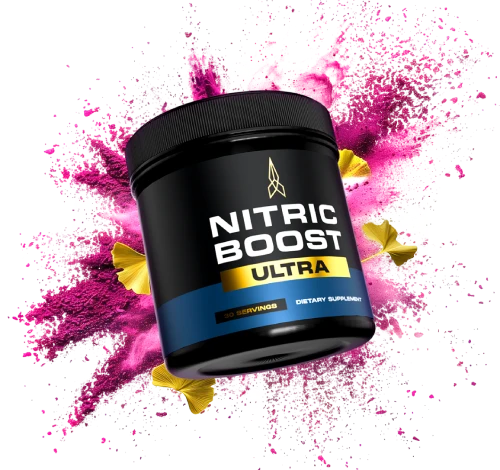
Men's circulation & nitric oxide support
Nitric Boost Ultra is a nitric-oxide-focused supplement built around beet root, L-citrulline, L-arginine, and a handful of botanicals traditionally used for circulation and male vitality. Below, we break down each ingredient individually — what it's supposed to do, why it's likely included, and how strong the actual clinical evidence is — rather than just repeating marketing claims.
Quick Overview
| Category | Nitric oxide / circulation support supplement |
|---|---|
| Format | Capsules, taken daily with water |
| Core ingredients | Beet root powder, L-citrulline DL-malate, L-arginine, niacin (B3) |
| Supporting ingredients | Horny goat weed, dong quai, ginkgo biloba, D-aspartic acid |
| Intended audience | Adult men interested in circulation, energy, and blood-flow-related performance |
| Not suitable for | Anyone on nitrate medication, PDE5 inhibitors, or blood-pressure drugs without medical guidance (see safety section) |
| Where sold | Direct from the manufacturer's site only |
Nitric Boost Ultra is a dietary supplement that combines nitrate-rich beet root with amino acids and botanical extracts to support nitric oxide production and blood flow. Nitric oxide is a signaling molecule your blood vessels produce naturally to relax and widen, and supplements like Nitric Boost Ultra are designed to give that pathway extra raw material rather than replace it.
It's positioned as a men's health formula: circulation, stamina, and blood-flow-related aspects of performance are the main themes across the ingredient list, alongside a couple of hormone-support and antioxidant ingredients layered on top.
Nitric Boost Ultra stands out because it pairs a direct nitrate source (beet root) with both major nitric oxide amino acid precursors, L-arginine and L-citrulline, in the same formula — a combination that isn't universal in this category. Many competing products lean on just one of these pathways; using more than one gives the formula multiple entry points into the same underlying process, though that doesn't automatically mean a bigger effect for every user.
Full Formula Breakdown
Every ingredient below is covered on its own: what it is, why it's likely in the formula, and an honest verdict on the actual research behind it — not just the marketing pitch.
Direct nitrate source
Beet root is naturally high in dietary nitrates, which the body can convert into nitrite and then nitric oxide. It's included because it's one of the few food-based ingredients with a well-documented, dose-dependent effect on blood vessel dilation.
Nitric oxide precursor + energy support
Citrulline is converted to arginine in the kidneys, which raises circulating arginine more efficiently than taking arginine directly (arginine is broken down heavily in the gut and liver before it reaches the bloodstream). The malate portion is a metabolic intermediate tied to energy production.
Direct nitric oxide precursor
Arginine is the amino acid nitric oxide synthase actually converts into nitric oxide. It's a logical inclusion on paper, since it's the direct substrate for the reaction the whole formula is built around.
Vasodilator, at higher doses
Niacin causes vasodilation (the well-known "niacin flush") and is included to support circulation through a separate mechanism from the nitric oxide pathway.
Antioxidant / circulation support
Ginkgo is included for its antioxidant flavonoids, which are thought to protect blood vessel walls from oxidative stress and support peripheral circulation.
Traditional libido support
Its active compound, icariin, has shown PDE5-inhibiting activity (a similar mechanism to some prescription erectile-dysfunction medications) in laboratory and animal studies.
Traditional circulation support
A root long used in traditional Chinese medicine, included here for its reputed circulatory effects rather than a specific nitric oxide mechanism.
Hormonal signaling support
An amino acid involved in the hypothalamic-pituitary-gonadal axis, included with the goal of supporting the body's own testosterone signaling.
Mechanism
Nitric Boost Ultra is designed to work in three stages: raising the raw materials for nitric oxide production, supporting the blood vessels that respond to it, and layering in secondary ingredients aimed at energy and hormone signaling. Each stage targets a different part of the same underlying circulation story.
Beet root nitrates and the amino acids L-arginine and L-citrulline all feed into the same endpoint: more substrate available for the body to convert into nitric oxide, via two separate biochemical routes (the nitrate-nitrite-NO pathway and the arginine-NO synthase pathway).
Niacin and ginkgo work on the vessel side rather than the nitric-oxide-supply side — niacin through direct vasodilation, ginkgo's flavonoids through antioxidant protection of the vessel lining (endothelium), which affects how well vessels respond to nitric oxide signaling in the first place.
D-aspartic acid, horny goat weed, and dong quai sit outside the core nitric oxide mechanism and are included for hormonal signaling and traditional circulatory use. This is the least clinically established third of the formula and functions more as a supporting layer than the main mechanism.
Nitric Boost Ultra is sold directly through the official manufacturer site in single-bottle and multi-bottle packages, with per-bottle cost typically dropping on larger orders. It is not distributed through third-party marketplaces, so purchases made anywhere else can't be verified as genuine or covered by the manufacturer's return policy.
Current pricing, bundle sizes, and the 60-day return policy are listed on the order page.
Nitric Boost Ultra's main safety consideration is its nitrate and nitric-oxide-boosting ingredients, which can interact with common cardiovascular medications. Anyone taking prescription nitrates, blood-pressure medication, or PDE5 inhibitors (like sildenafil or tadalafil) should talk to a doctor before use, since combining nitric-oxide-boosting supplements with those drugs can cause blood pressure to drop too far.
Frequently Asked Questions
How long it takes for Nitric Boost Ultra to work varies by ingredient: beet root's nitrate effect on blood flow can appear within hours of a dose, while amino acid and hormonal ingredients typically need several weeks of consistent use before any cumulative effect would be noticeable.
Nitric Boost Ultra is intended for daily use, and its core ingredients (beet root, citrulline, arginine) have reasonable safety records at typical supplement doses — but "safe to take daily" still depends on your individual health situation, especially if you take blood pressure or ED medication.
You should not take Nitric Boost Ultra with blood pressure medication without first checking with a doctor, because stacking a nitric-oxide-boosting supplement on top of antihypertensive drugs can push blood pressure lower than intended.
What makes Nitric Boost Ultra different from a plain L-arginine supplement is that it combines multiple nitric oxide pathways (nitrate, citrulline, and arginine) instead of relying on one, alongside vessel-support and hormonal ingredients layered on top.
Nitric Boost Ultra may have a modest effect on testosterone through its D-aspartic acid content, but human research on D-aspartic acid and testosterone is inconsistent, so this shouldn't be treated as a reliable testosterone-boosting effect.
Research Elaboration
The strongest science behind Nitric Boost Ultra's category is on dietary nitrate: multiple systematic reviews and meta-analyses of randomized controlled trials link beet root and inorganic nitrate intake to measurable, if modest, reductions in systolic blood pressure. The weaker science sits with the traditional botanicals and hormonal-support ingredients, where most available data is preclinical or drawn from small, short trials.
General background on vitamin and mineral safety, including niacin, is also available from the NIH Office of Dietary Supplements for readers who want a neutral, non-commercial reference point.
Educational Review Pages
The biology behind how nitrate and amino acid precursors turn into vasodilation.
Read the mechanism section →A closer look at the mixed evidence behind DAA and male hormone levels.
Read the research section →Medication interactions and health conditions worth checking with a doctor first.
Read the safety FAQs →