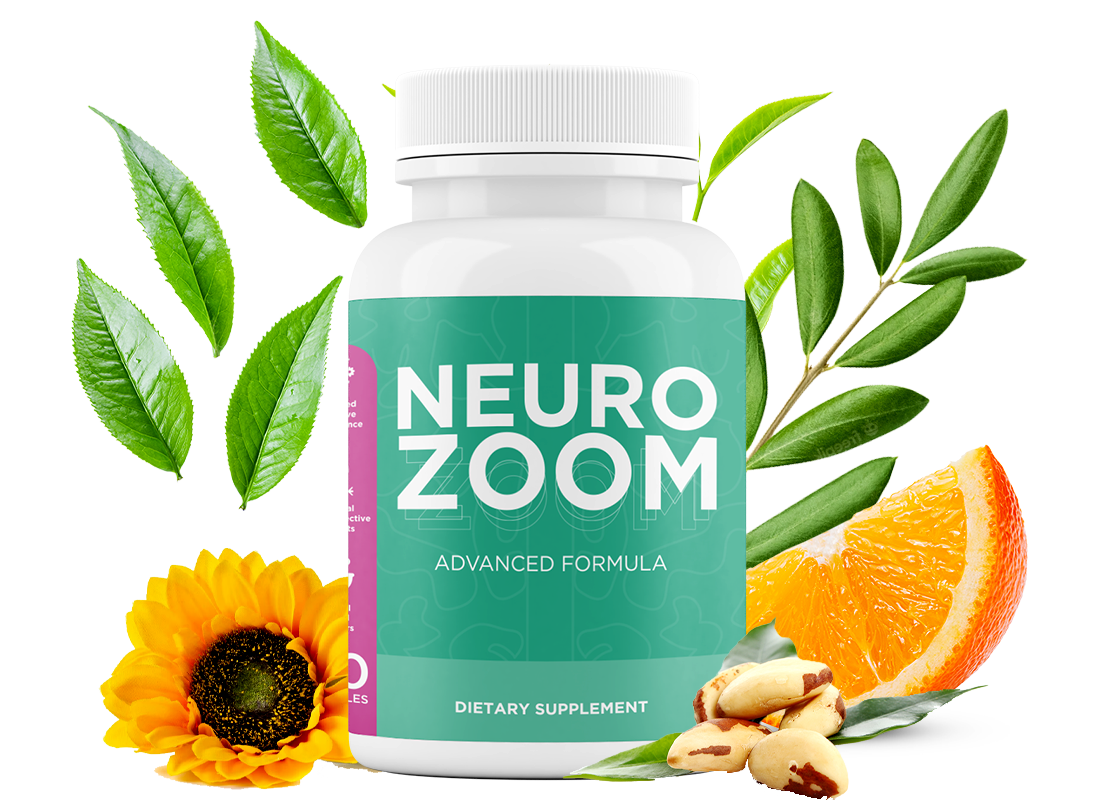
A closer look at the herb-and-vitamin blend built for everyday focus
NEUROZOOM is a supplement that combines B-vitamins, antioxidant vitamins, and traditional cognitive-support herbs like bacopa monnieri and huperzine A into one daily formula, aimed at people who want steadier focus, memory recall, and mental clarity without stimulants.
NEUROZOOM is a daily capsule supplement that pairs B-vitamins and antioxidant vitamins with cognitive-support herbs such as bacopa monnieri, huperzine A, and DMAE. It's positioned as a non-stimulant option for people who want to support focus and memory as part of a normal daily routine, rather than a fast-acting "smart drug."
What it's designed to do
The formula leans on nutrients tied to the acetylcholine and glutamate systems — two of the brain's core communication pathways for memory and attention — alongside herbs traditionally used in Ayurvedic medicine for mental clarity.
What it isn't
NEUROZOOM is a dietary supplement, not a medication. It hasn't been evaluated by the FDA to diagnose, treat, cure, or prevent any disease, and it isn't a substitute for treatment of ADHD, dementia, or other diagnosed conditions.
Why It's Different
Why does NEUROZOOM stand out from other focus supplements?
NEUROZOOM stands out because it combines several individually-studied cognitive nutrients — bacopa, huperzine A, phosphatidylserine, and choline — into one stimulant-free formula, instead of relying on caffeine to create a feeling of alertness that wears off.
Built around researched compounds
Rather than a proprietary blend of unnamed extracts, several of NEUROZOOM's core ingredients — bacopa monnieri, huperzine A, and phosphatidylserine — have each been the subject of published, peer-reviewed human trials, which you can read about in the ingredient section below.
No stimulant crash
Because NEUROZOOM contains no caffeine or synthetic stimulants, it's designed to support focus gradually through nutrient and herb intake rather than through a short-lived stimulant spike.
Full Ingredient Breakdown
What's inside the NEUROZOOM formula?
NEUROZOOM's label lists B-vitamins, antioxidant vitamins, trace minerals, and cognitive-support herbs. Below, each group is explained in detail: what it's meant to do, why it's included, and an honest verdict based on the current research.
Energy metabolismNerve functionAcetylcholine support
Why it's here: B-vitamins are cofactors your nervous system depends on to convert food into usable energy and to build neurotransmitters. Niacin, for example, is a precursor to NAD+, a coenzyme involved in cellular energy production in neurons, and biotin plays a role in the metabolic pathway that supports acetylcholine synthesis — the neurotransmitter most closely tied to memory and learning.
What the evidence shows: B-vitamin deficiency is well documented to impair cognitive function, and correcting a deficiency reliably helps. The less certain part is whether adding more B-vitamins on top of an already-adequate diet produces a noticeable focus boost in someone who isn't deficient — large trials on healthy adults are mixed on that point.
Verdict: Safe, well-established nutrients that support the biological groundwork for cognition. Most useful if your diet is currently low in them; a smaller, harder-to-measure benefit if it isn't.
Vitamin C, Vitamin E, Beta-Carotene: Antioxidant Vitamins
AntioxidantCellular protection
Why it's here: Neurons are especially vulnerable to oxidative stress because the brain uses a disproportionate share of the body's oxygen. Vitamin C, Vitamin E, and beta-carotene are antioxidants that help neutralize free radicals, a normal byproduct of that high metabolic demand.
What the evidence shows: Population studies link adequate antioxidant vitamin intake to healthier long-term cognitive aging, but this is general nutritional science, not a NEUROZOOM-specific claim, and it shouldn't be read as protection against any specific toxin or condition.
Verdict: A reasonable, low-risk inclusion that supports general cellular health rather than delivering a fast, noticeable cognitive effect on its own.
Why it's here: Trace minerals act as cofactors for hundreds of enzyme reactions throughout the body, including some involved in neurotransmitter synthesis and antioxidant enzyme systems (selenium, for instance, is a component of glutathione peroxidase, an antioxidant enzyme).
What the evidence shows: These minerals matter for overall health, and deficiencies can affect cognition and mood. There isn't strong human trial evidence, however, that supplementing trace minerals beyond a normal adequate intake meaningfully sharpens focus in someone who isn't deficient.
Verdict: Rounds out the formula nutritionally at typical supplement doses; not the ingredients doing the heavy lifting for focus.
Bacopa Monnieri
Ayurvedic herbMemory recallHuman clinical trials
Why it's here: Bacopa monnieri is an Ayurvedic herb traditionally used for memory and learning. It's one of the more heavily studied ingredients in this category.
What the evidence shows: A widely cited systematic review of double-blind, placebo-controlled human trials found that eight of nine trials reviewed showed improvements in memory, attention, or mood, generally at doses of 300–450mg of standardized extract taken daily for 8–12 weeks. Not every trial has replicated this: a 2024 randomized trial in adults with self-reported memory concerns found stress and fatigue benefits but no significant memory improvement over placebo. Effects, where present, tend to build gradually rather than appear immediately.
Verdict: The best-supported ingredient in the formula. Reasonable expectation is a gradual memory benefit over several weeks, not an immediate effect — and results vary between studies.
Huperzine A & Beta-Carotene: Acetylcholinesterase Inhibition
Acetylcholine supportEnzyme inhibitor
Why it's here: Huperzine A, extracted from Chinese club moss, inhibits acetylcholinesterase — the enzyme that breaks down acetylcholine. By slowing that breakdown, more acetylcholine theoretically stays available for signaling between neurons involved in memory.
What the evidence shows: Huperzine A has been studied for cognitive support, most extensively in East Asian clinical research, with some positive findings on memory in both healthy and cognitively impaired populations. Because it's a genuine enzyme inhibitor rather than an inert nutrient, dosing matters more here than with most other ingredients in the formula, and it shouldn't be combined with other acetylcholinesterase-active substances without medical guidance.
Verdict: A pharmacologically active ingredient with real supporting mechanism and some positive trial data; the ingredient most worth mentioning to a doctor if you take other medications.
Choline & DMAE
Acetylcholine precursorMembrane support
Why it's here: Choline is a direct building block the body uses to manufacture acetylcholine. DMAE is included because it's structurally related to choline and is marketed as supporting the same pathway, though it converts to choline in the body far less efficiently than choline itself does.
What the evidence shows: Adequate choline intake is genuinely linked to healthy brain function, and choline deficiency is associated with cognitive and liver problems. DMAE's own evidence base is thinner and mostly older or lower-quality; reviewers generally treat it as a secondary, exploratory ingredient rather than a proven one.
Verdict: Choline is a solid, well-justified inclusion. DMAE's addition is more of a bonus than a proven driver of effect.
Why it's here: Phosphatidylserine is a phospholipid that makes up part of the neuron's cell membrane and plays a role in signaling and neurotransmitter release, including acetylcholine and dopamine.
What the evidence shows: A 2022 systematic review and meta-analysis found phosphatidylserine supplementation showed some potential benefit for memory, though the trials it pooled varied widely in the form and dose of PS used, which makes head-to-head comparisons difficult. Independent lab testing has also found that some commercial PS products don't contain their labeled amount, so sourcing quality matters for this particular ingredient.
Verdict: Mechanistically well-justified with modest supporting trial data; a "maybe helps, unlikely to hurt" ingredient rather than a guaranteed one.
Glutamic Acid, GABA & L-Glutamine
Neurotransmitter precursorsLearning & recall
Why it's here: Glutamate is the brain's primary excitatory neurotransmitter, tied to signal speed between neurons, while GABA is its inhibitory counterpart, involved in how the brain filters and consolidates new information. L-glutamine is a precursor the body can convert into both.
What the evidence shows: These are naturally occurring amino acids the body already produces and regulates tightly through the blood-brain barrier. Oral supplementation with small amounts is generally regarded as safe, but there's limited direct clinical trial evidence that supplementing them, on top of what the body already makes, produces a measurable cognitive boost in healthy adults.
Verdict: Biologically relevant to memory and learning in theory; the direct supplementation evidence in humans is thin.
Why it's here: This group is included as a supporting blend rather than headline ingredients. DHA is an omega-3 fatty acid with genuine, well-established research behind brain structure and function; bilberry and licorice root have traditional use around circulation and stress response; N-acetyl-L-tyrosine is a precursor to dopamine and norepinephrine.
What the evidence shows: DHA has the strongest independent evidence of this group. The others are present at supporting doses, more in line with general wellness formulas, and shouldn't be expected to individually move the needle on focus.
Verdict: Reasonable rounding-out ingredients, led by DHA as the one with real independent research behind it.
Mechanism
How does NEUROZOOM work?
NEUROZOOM works by combining nutrients and herbs that act on three areas tied to cognition: acetylcholine availability, cellular energy metabolism, and antioxidant protection against everyday oxidative stress on neurons.
01
Feeding the acetylcholine system
Choline and DMAE supply raw material for acetylcholine, while huperzine A slows the enzyme that breaks it down — together aimed at keeping more of this memory-linked neurotransmitter in circulation.
02
Supporting cell energy & structure
B-vitamins support mitochondrial energy production in neurons, and phosphatidylserine contributes to the membrane structure neurons use to send and receive signals.
03
Buffering oxidative stress
Vitamin C, Vitamin E, and beta-carotene work as antioxidants, aimed at limiting the everyday cellular wear that comes from the brain's high oxygen and energy demand.
04
Traditional herbal support
Bacopa monnieri, taken consistently over 8–12 weeks in most studies, is the ingredient with the clearest published human trial data behind gradual memory support in this formula.
Honest Assessment
NEUROZOOM pros and cons
Pros
No caffeine or synthetic stimulants, so no crash
Several ingredients (bacopa, huperzine A, phosphatidylserine, DHA) have real published human research
Made in a GMP-certified facility
Backed by a 60-day money-back guarantee from the manufacturer
Capsule format is easy to add to a daily routine
Cons
Exact milligram doses for every ingredient aren't published on the label
Herbal effects (especially bacopa) tend to build gradually over weeks, not instantly
Not studied as a complete finished formula, only ingredient-by-ingredient
Only sold through the official website, not in retail stores
Not a treatment for ADHD, dementia, or other diagnosed conditions
Where To Buy
Where to buy NEUROZOOM
NEUROZOOM is sold exclusively through the official manufacturer website. Buying directly is the only way to access the current pricing tiers, bundle discounts, and the 60-day money-back guarantee — it isn't available through third-party retailers.
NEUROZOOM's ingredients are generally recognized as safe at typical supplement doses, but some individual ingredients — particularly huperzine A and bacopa — can cause mild digestive upset in some people and can interact with certain medications.
Commonly reported, mild effects
Bacopa monnieri is most often associated with mild stomach upset, nausea, or dry mouth, especially when started at a full dose rather than worked up to gradually. Taking capsules with food tends to reduce this.
Who should talk to a doctor first
Anyone who is pregnant or breastfeeding, taking thyroid medication, blood thinners, or medications for Alzheimer's or myasthenia gravis (which also affect acetylcholinesterase) should check with a doctor before taking NEUROZOOM, given the huperzine A and bacopa content.
FAQs
NEUROZOOM FAQs
How long does NEUROZOOM take to work?
NEUROZOOM typically takes several weeks to work, since its main herbal ingredient, bacopa monnieri, showed measurable memory benefits in clinical trials only after 8–12 weeks of consistent daily use, not after a single dose.
Is NEUROZOOM safe to take every day?
NEUROZOOM is formulated to be taken every day as a daily capsule, using ingredients generally recognized as safe at supplement doses, though anyone on prescription medication should confirm safety with a doctor before daily use.
Does NEUROZOOM contain caffeine?
No, NEUROZOOM does not contain caffeine. NEUROZOOM is formulated without caffeine or other synthetic stimulants, relying instead on B-vitamins, antioxidants, and cognitive-support herbs.
Can I take NEUROZOOM with other medications?
You should check with a doctor before taking NEUROZOOM alongside other medications, particularly thyroid drugs, blood thinners, or acetylcholinesterase-active medications, since NEUROZOOM contains huperzine A, which acts on the same enzyme pathway.
Where can I buy NEUROZOOM?
NEUROZOOM can only be bought through the official manufacturer website, where current pricing, bundle options, and the money-back guarantee are listed.
The Research
What does the research actually say about NEUROZOOM's approach?
The research behind NEUROZOOM's approach is strongest for bacopa monnieri, which has been tested in multiple randomized, placebo-controlled human trials, most showing gains in memory free recall after 8–12 weeks of daily use, though not every trial has replicated a memory benefit.
A systematic review of randomized controlled trials concluded there's evidence bacopa improves free recall memory specifically, even as evidence for other cognitive domains remains less consistent across studies. That nuance matters: it means bacopa's research support is real but narrower than "improves all cognitive function" marketing claims often suggest.
Phosphatidylserine research tells a similar story of "modest but real." A 2022 meta-analysis pooling multiple trials found a potential memory benefit, but the reviewers flagged that PS products in the studies varied so much in formulation that direct comparisons are difficult — a limitation independent of NEUROZOOM specifically, but one worth understanding before expecting a dramatic effect.
Huperzine A's research base leans more heavily on studies from China, where it has a longer history of clinical use, with several trials reporting memory benefits tied to its acetylcholinesterase-inhibiting mechanism. Because that mechanism is genuinely pharmacologically active rather than purely nutritional, it's treated with more caution around dosing and drug interactions than the vitamin components of the formula.
Put together, the honest summary is: NEUROZOOM's formula draws on real, peer-reviewed research for several of its key ingredients, the effects reported in that research are generally modest and gradual rather than dramatic, and none of the research was conducted on NEUROZOOM as a finished product — it applies to the ingredients individually, at the doses those specific studies used.
Keep Reading
NEUROZOOM educational review pages
More background reading on the ingredient categories and research areas covered above.