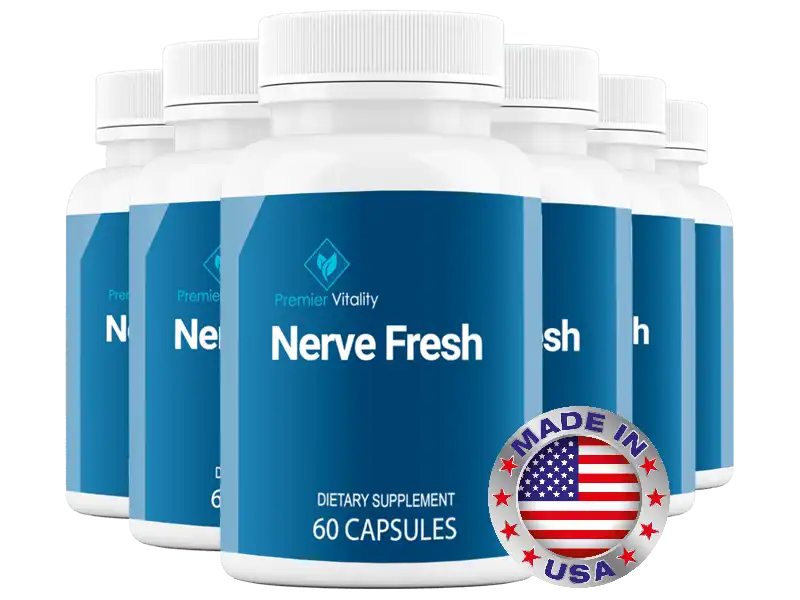
Nerve Fresh ingredients, one at a time
What each ingredient is, why it's likely in the formula, and what the evidence actually supports.
Passionflower (Passiflora incarnata)
A traditional calming herb long used for anxiety and sleep difficulty. Some research points to interaction with GABA, a neurotransmitter that lowers nervous-system excitability, which is the likely reason it's included in a nerve-focused formula.
Verdict: Reasonable choice for general calming support; direct human evidence for neuropathic pain specifically is limited rather than absent.
Prickly Pear (Opuntia species)
A cactus fruit extract rich in antioxidant flavonoids. Because oxidative stress is one contributor to nerve cell damage — particularly in diabetic neuropathy — an antioxidant ingredient has a plausible rationale here. Most of the supporting research is preclinical (cell and animal studies) rather than human trials.
Verdict: Plausible antioxidant support ingredient; not a demonstrated standalone neuropathy treatment.
Marshmallow Root (Althaea officinalis)
Valued traditionally for its mucilage content and soothing effect on irritated tissue, historically used for digestive and respiratory complaints. Its inclusion in a nerve formula leans more on traditional herbal use than on nerve-specific clinical data.
Verdict: Generally well tolerated; its role here is more traditional than evidence-driven.
Corydalis (Corydalis yanhusuo)
Used in traditional Chinese medicine for pain relief. It contains alkaloids, including dehydrocorybulbine, that have been studied in animal models for reducing inflammatory and neuropathic pain without the tolerance buildup seen with opioids. This is arguably the most pharmacologically active ingredient in the formula, but confirmatory human trials are still limited.
Verdict: The most researched ingredient in the blend at a mechanistic level, though mainly from animal studies so far.
California Poppy (Eschscholzia californica)
Despite the name, it's botanically unrelated to opium poppy and contains no opioid compounds — no morphine, no codeine. It's traditionally used as a mild sedative and analgesic, often paired with passionflower or corydalis. Direct research on nerve pain is thinner than for the other ingredients.
Verdict: A gentle, low-risk addition with modest direct evidence of its own.