A plain-language look at this nail and skin oil blend
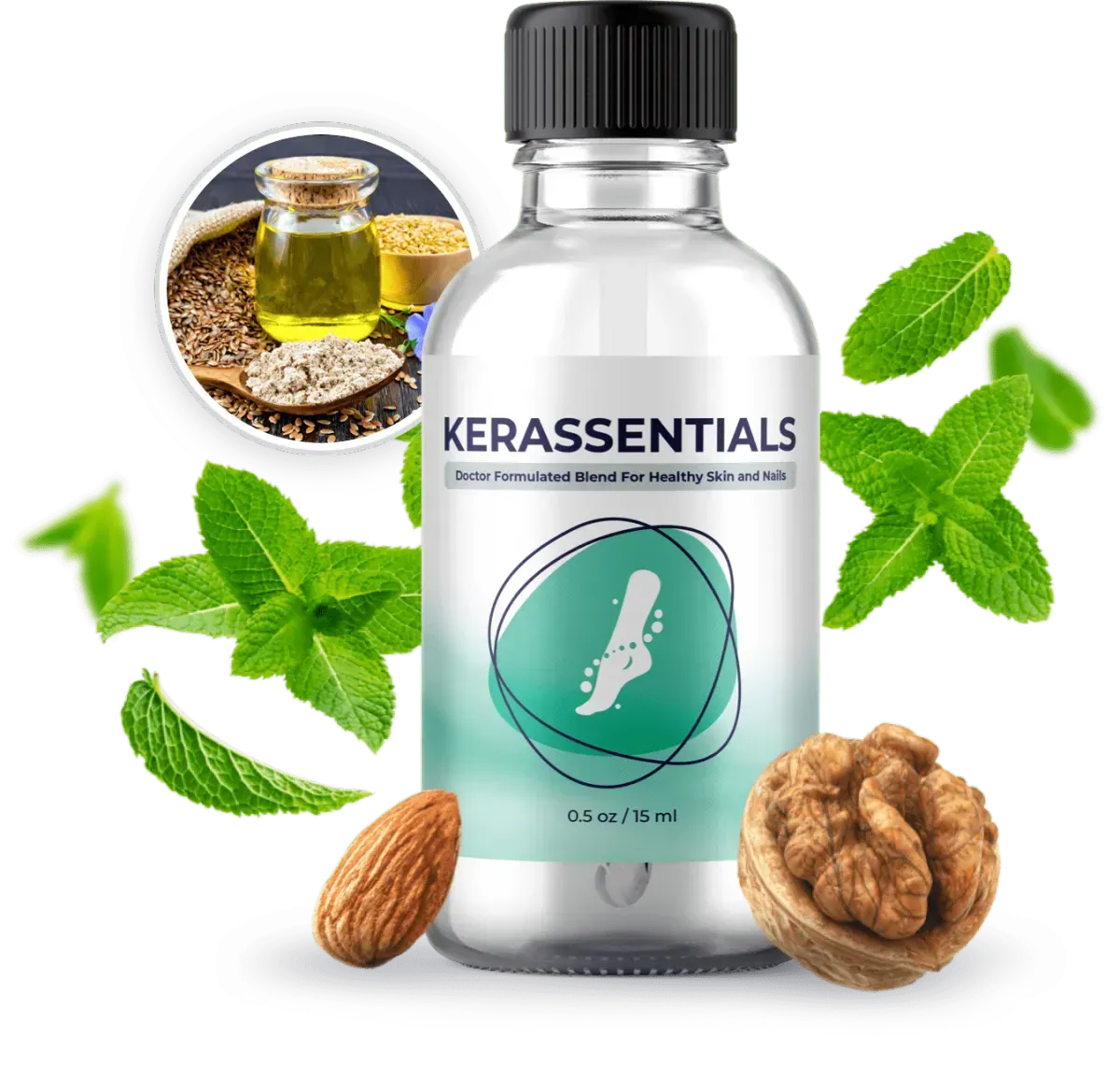
Kerassentials is a topical oil blend marketed for the look and feel of nails and the skin around them. This page explains what's in it, how people typically use it, what independent evidence exists for its individual ingredients, and what to check before you buy — without overstating what the product itself has been proven to do.
A quick reference before you read the full breakdown below.
Product name
Kerassentials
Format
Topical oil blend, applied with a brush-tip applicator
Marketed for
The appearance of nails and the surrounding skin
Core ingredients
Plant oils such as tea tree, clove bud, lavender, flaxseed and almond oil, plus aloe vera
Regulatory status
Sold as a cosmetic; not an FDA-approved drug and not evaluated by the FDA for treating fungal infections
Typical use
Applied directly to clean, dry nails, usually once or twice daily
Who should check with a doctor first
Anyone with a diagnosed nail infection, diabetes, broken skin, or a known allergy to essential oils
What is Kerassentials?
Kerassentials is a topical oil sold as a cosmetic nail and skin product, not a medicine. It's marketed as a blend of plant-derived oils that a person brushes onto the nails and surrounding skin, most often after showering, with the stated goal of supporting a healthier look and feel over time. Because it's positioned as a cosmetic rather than a drug, it hasn't gone through the clinical trial process that treatments for diagnosed nail infections require, and its manufacturer's claims about results are its own, not independently verified.
If you're dealing with a suspected fungal nail infection — thickened, discolored, or crumbling nails — that's worth a conversation with a doctor or podiatrist, since some cases need a prescription antifungal and cosmetic oils aren't a substitute for that.
What makes Kerassentials different from a plain nail oil?
Kerassentials is positioned around its specific combination of oils rather than a single active ingredient, and around an applicator designed for repeated daily use. Whether that combination outperforms a simpler nail oil hasn't been tested in an independent head-to-head study, so the honest answer is that its main differentiators are formulation and marketing, not proven superior results.
A few things worth knowing before you compare it to alternatives:
It's applied topically, not swallowed — it isn't a supplement capsule despite sometimes being grouped with them.
The ingredient list leans on essential oils long used in skin care, several of which have some laboratory-level antifungal or anti-inflammatory data (details below).
Consistency of use, nail trimming, and keeping feet dry generally matter as much as any single product for nail appearance.
What's actually in Kerassentials?
Ingredient lists for products in this category have varied by batch and retailer. Always check the current label on the bottle or listing you're buying, since formulations can change. Below is a breakdown of the ingredients most commonly listed, why each is typically included, and an honest verdict on the evidence behind it.
Tea tree oil (Melaleuca alternifolia)
Why it's there: Tea tree oil is one of the most studied essential oils for skin and nail use, and it's included for its antifungal and antimicrobial reputation.
What the evidence shows: Small clinical studies going back to the 1990s have tested tea tree oil, alone or combined with other treatments, on mild toenail fungus, with some showing modest improvement over placebo — but results across studies are inconsistent and none establish it as a cure for established infections.
Verdict: Reasonable inclusion for a cosmetic nail oil; not a substitute for a prescription antifungal in a confirmed infection.
Clove bud oil
Why it's there: Clove oil's main compound, eugenol, has shown antimicrobial activity in laboratory (in vitro) research, which is likely why it's included alongside tea tree oil.
What the evidence shows: Most of this evidence is from lab dishes rather than people applying the oil to nails, so the jump from "kills microbes in a test tube" to "improves your nails" isn't fully proven.
Verdict: Plausible supporting ingredient, but the human-use evidence is thin.
Lavender oil
Why it's there: Lavender is included mainly for scent and its traditional use in calming irritated skin, and it has some mild antimicrobial properties in lab studies.
What the evidence shows: Its role here is more supportive (comfort, fragrance, skin-soothing) than a primary active ingredient.
Verdict: Low-risk, mostly a comfort and formulation ingredient.
Flaxseed oil and almond oil
Why they're there: Both are emollient oils rich in fatty acids and, in almond oil's case, vitamin E — included to moisturize the skin around the nail and reduce dryness or cracking.
What the evidence shows: Their moisturizing effect on skin is well established in cosmetic science; there's no meaningful evidence they treat fungal infections themselves.
Verdict: Sensible for skin comfort, not positioned as antifungal actives.
Aloe vera leaf extract
Why it's there: Aloe vera is a long-standing skin-soothing ingredient, added here to calm irritation and support the cuticle area.
What the evidence shows: Reasonably good evidence for soothing minor skin irritation and hydration; limited direct evidence for nail fungus specifically.
Verdict: Solid comfort ingredient, not a primary antifungal driver.
How is Kerassentials meant to be used?
Kerassentials is applied topically with its built-in brush applicator, most commonly once or twice a day on clean, dry nails and the surrounding skin. The manufacturer's instructions matter more than any general guide, since exact directions can vary by batch — check the label that ships with your bottle.
1
Wash and dry the area
Nails and surrounding skin are cleaned and thoroughly dried first, since applying oil to damp skin can trap moisture rather than help it.
2
Apply a thin layer
A small amount is brushed onto the nail bed and edges, typically once or twice daily, following the product's label.
3
Let it absorb
The oil is left to dry before covering the area with socks or footwear, which the manufacturer suggests helps it absorb rather than rub off.
4
Use consistently
Cosmetic nail appearance changes gradually; manufacturers of products like this typically suggest weeks of daily use before judging results, which is also true of nail growth in general regardless of product.
Pros and cons of Kerassentials
Potential upsides
Ingredient list is disclosed rather than hidden behind a proprietary-blend label on most listings.
Built around plant oils with a long history of topical cosmetic use.
Simple daily application routine with no swallowing or dosing math.
Worth weighing carefully
No independent clinical trial of the finished product has been published, so claims of nail fungus "elimination" go beyond what's proven.
It's a cosmetic, not an FDA-approved antifungal drug.
Essential oils can irritate sensitive skin or trigger allergic reactions in some people.
Results, if any, depend heavily on consistent long-term use.
Where can you buy Kerassentials?
Kerassentials is sold directly through its official product listing rather than in most major retail stores. Buying from the official listing is generally the safer route for any niche cosmetic oil like this, since third-party marketplace listings for supplement-adjacent products are a common source of counterfeits.
Check the batch and ingredient label against what's described on the official listing before use.
Review the seller's return policy before buying multiple bottles at once.
Be skeptical of "clinically proven cure" language wherever you see it — that's a marketing claim, not a regulatory one.
Are there side effects or safety concerns with Kerassentials?
As a topical essential-oil blend, Kerassentials carries the same general risks as any essential-oil cosmetic: skin irritation, redness, or an allergic reaction in people sensitive to specific oils like tea tree or clove. It hasn't been evaluated by the FDA for safety or effectiveness as a treatment.
Patch-test on a small area of skin before applying it broadly, especially if you have sensitive skin or known essential-oil allergies.
Stop use and see a doctor if you notice redness, swelling, blistering, or worsening irritation.
People who are pregnant, breastfeeding, or managing diabetes-related foot care should check with a doctor before adding any new topical product to their routine.
Keep it away from broken skin, eyes, and mucous membranes.
Kerassentials FAQs
Is Kerassentials a cure for toenail fungus?
Kerassentials is not a cure for toenail fungus. It's sold as a cosmetic oil, and no independent clinical trial of the finished product has confirmed it eliminates fungal infections; a diagnosed infection is generally best evaluated by a doctor or podiatrist.
How long does Kerassentials take to show results?
Manufacturers of products like Kerassentials typically suggest several weeks of consistent daily use before judging results, since visible nail changes take time regardless of the product used, as nails grow slowly by nature.
What are the main ingredients in Kerassentials?
The main ingredients commonly listed for Kerassentials include tea tree oil, clove bud oil, lavender oil, flaxseed oil, almond oil, and aloe vera leaf extract, though exact formulations can vary by batch, so the current label should always be checked.
Is Kerassentials safe to use every day?
Daily use is how Kerassentials is meant to be applied, but as with any essential-oil product, daily use also means daily exposure, so anyone with sensitive skin should patch-test first and watch for irritation.
Can Kerassentials replace a prescription antifungal medication?
Kerassentials cannot replace a prescription antifungal medication for a confirmed fungal infection, since it is regulated and sold as a cosmetic rather than a drug, and prescription treatments have gone through a different level of testing.
What does the research actually say about oils like these?
Research on individual ingredients in Kerassentials is more established than research on the finished blend itself. Tea tree oil's antifungal properties have been examined in laboratory settings and a handful of small clinical trials on mild onychomycosis, generally showing modest effects rather than dramatic cure rates. Eugenol, the main compound in clove oil, shows antimicrobial activity in lab research, though translation to real-world nail outcomes is less studied. This is a common pattern across the natural nail-care category: ingredient-level science is often real, while product-level proof is thinner.
If you want to dig further, dermatology and podiatry resources are a better source than product marketing pages for understanding how nail fungus is actually diagnosed and treated, including when topical options are appropriate versus when oral medication is needed.
Further reading on nail and skin health
A few starting points if you want context beyond this page: