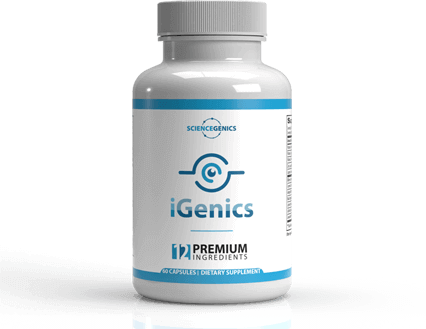
Bottle of iGenics eye health capsules on a light blue background
Eye Health Supplement

iGenics

A plant-based capsule built around lutein, zeaxanthin, bilberry and ginkgo biloba

iGenics is a daily capsule supplement marketed for everyday eye comfort. Its label draws on ingredients long studied in eye research — carotenoids and antioxidants similar to those used in the NIH's AREDS2 trial — combined with botanical extracts like bilberry, ginkgo biloba and saffron. Below is a plain look at what's actually in it, what the evidence does and doesn't support, and where the label falls short of full disclosure.

Statements on this page have not been evaluated by the Food and Drug Administration. This product is not intended to diagnose, treat, cure, or prevent any disease. Talk to an eye-care professional before starting any new supplement.

iGenics at a Glance
Product typePlant-based capsule supplement for general eye comfort
FormatCapsules, typically sold as a 30-day (60-capsule) bottle
Headline ingredientsLutein, zeaxanthin, bilberry extract, ginkgo biloba, saffron extract, zinc, copper, turmeric
Diet fitMarketed as vegan, non-GMO, and free of common fillers
Where soldDirect from the manufacturer's site only — not distributed through major pharmacies
Price rangeVaries by bundle size and current promotion — confirm the live price on the official order page before buying
Best suited forAdults wanting general antioxidant and screen-strain support — not a treatment for diagnosed eye disease

What Is iGenics?

iGenics is a dietary supplement built around carotenoids (lutein and zeaxanthin), antioxidant botanicals (bilberry, saffron, turmeric), circulatory support (ginkgo biloba), and the zinc-and-copper pairing used in the AREDS2 formula. It's positioned as a natural, everyday option for people concerned about screen-related eye strain and long-term eye comfort, rather than as a treatment for an existing eye condition.

Why iGenics Stands Out

What separates iGenics from a plain multivitamin

Full disclosure label

Dosages are listed, not hidden in a blend

Some retailer listings for iGenics publish per-capsule amounts for each ingredient rather than a single "proprietary blend" figure. That transparency lets you compare the label against published research yourself, which most budget eye supplements don't allow.

AREDS2-adjacent formula

Built around a recognizable research base

Lutein, zeaxanthin, vitamin C, vitamin E, zinc and copper are the same ingredient family studied in the NIH's AREDS2 trial, though iGenics is not the AREDS2 formula itself and hasn't been through the same clinical testing — see the research section below for the distinction.

Botanical layer

Adds circulatory and antioxidant extras

Bilberry, ginkgo biloba and saffron extract go beyond the core AREDS2 nutrients, targeting blood flow to the eye and general oxidative stress — areas with promising but smaller and less conclusive research than the core AREDS2 nutrients.

Format

Vegan capsule, marketed filler-free

The product is marketed as non-GMO and vegan, using turmeric rather than synthetic flow agents during capsule manufacturing — a detail worth confirming on the current label, since formulas can change between batches.

Inside the Capsule

iGenics Ingredients, One at a Time

Every component below is broken down the same way: what it is, why a formula like iGenics would include it, and an honest verdict on the strength of the evidence behind it.

Lutein & Zeaxanthin

What it is: Two carotenoid pigments that concentrate naturally in the macula, the part of the retina responsible for sharp central vision.

Why it's included: They're the carotenoids studied in the NIH's AREDS2 trial and are commonly described as filtering high-energy blue light and supporting antioxidant defense in the retina.

Verdict: Reasonably well-supported for people with existing intermediate AMD; evidence for slowing early, non-diagnosed age-related decline in the general population is weaker.

Bilberry Extract

What it is: An extract of Vaccinium myrtillus berries, rich in anthocyanin antioxidants.

Why it's included: Traditionally associated with night vision and healthy capillary function in the eye.

Verdict: Human clinical evidence is limited and mixed; most robust support comes from older or smaller studies rather than large modern trials.

Ginkgo Biloba

What it is: A leaf extract widely sold for circulation and cognitive support.

Why it's included: Proposed to improve microcirculation to the retina and optic nerve, which is the rationale for including it in an eye formula.

Verdict: Some small trials suggest a possible benefit for ocular blood flow; it isn't established as a standard treatment, and it can interact with blood thinners.

Saffron Extract

What it is: An extract of Crocus sativus stigmas, a spice ingredient increasingly studied for eye and mood-related effects.

Why it's included: Early research has explored saffron's antioxidant effect on retinal cells and its potential role in visual function.

Verdict: Promising early-stage research, but studies are still small; not yet a standard, guideline-backed eye treatment.

Zinc & Copper

What it is: A mineral pair, typically dosed together because high-dose zinc alone can deplete copper levels.

Why it's included: Zinc is one of the core AREDS2 nutrients, involved in transporting vitamin A within the retina; copper is added specifically to offset zinc's depletion effect.

Verdict: The zinc-copper pairing is a well-established, evidence-based design choice within the AREDS2 research — one of the sturdier parts of this formula.

Turmeric (Curcumin)

What it is: An extract of turmeric root, used here partly as a natural processing aid and partly for its own antioxidant properties.

Why it's included: Curcumin has broad anti-inflammatory research behind it in general health contexts, which formulas extend — often speculatively — to eye inflammation.

Verdict: Well studied for general inflammation; direct evidence for eye-specific outcomes at supplement doses is thinner.

Mechanism

How does iGenics claim to work?

iGenics is designed around three overlapping mechanisms: filtering high-energy light before it reaches the retina, neutralizing oxidative stress with antioxidant compounds, and supporting blood flow to ocular tissue. None of these mechanisms are unique to iGenics — they're the same rationale behind most carotenoid-and-antioxidant eye formulas — but here's how the individual ingredients map onto each one.

Light filtering

Lutein and zeaxanthin accumulate in the macula, where they're thought to absorb a portion of incoming blue light before it can generate reactive oxygen species in nearby cells. This is the best-evidenced mechanism in the formula.

Antioxidant defense

Vitamin C, vitamin E, saffron and turmeric are included to neutralize free radicals generated by normal metabolic activity and light exposure in the eye. This is a general mechanism common to antioxidant supplementation broadly, not specific to iGenics.

Circulatory support

Ginkgo biloba is included specifically for its proposed effect on microcirculation, intended to keep retinal cells supplied with oxygen and nutrients.

Structural nutrient supply

Zinc, copper and vitamin A round out the formula with nutrients directly tied to retinal pigment production and the visual cycle — the part of the label most directly grounded in the AREDS2 research.

Weighing It Up

iGenics Pros and Cons

Pros

  • Ingredient list overlaps meaningfully with the AREDS2 research nutrients (lutein, zeaxanthin, zinc, copper, vitamin C, vitamin E).
  • Full-disclosure labeling on per-ingredient dosage, rather than a hidden blend.
  • Vegan, non-GMO positioning with turmeric used instead of synthetic flow agents.
  • Adds circulatory-focused botanicals (ginkgo, bilberry) beyond a standard AREDS2 stack.

Cons

  • iGenics itself has not been through the clinical trials that AREDS2 went through — it borrows the ingredient logic, not the study results.
  • Several botanical ingredients (bilberry, saffron) have promising but still limited human evidence.
  • Sold only through the manufacturer's site, so there's no independent retailer pricing to compare.
  • Not a substitute for a diagnosed eye condition — anyone with existing AMD, glaucoma, or diabetic eye disease should be managed by an eye-care professional, not a supplement alone.
Availability

Where to Buy iGenics

iGenics is sold directly through the manufacturer's official order page, generally in single-bottle and multi-bottle bundle options, with per-bottle price typically dropping on larger bundles. Prices and any money-back guarantee terms change with ongoing promotions, so treat any number you see elsewhere as approximate and confirm the current terms on the order page itself before buying.

Disclosure: links on this page may be affiliate links. If you buy through them, Supplements Magzine may earn a commission at no extra cost to you. This does not change our approach to describing what the evidence does and doesn't support.

iGenics Side Effects and Safety

Most of iGenics' ingredients are common in over-the-counter eye and multivitamin supplements and are generally well tolerated at typical doses. Mild digestive upset is the most commonly reported issue with carotenoid and botanical supplements generally. A few specific points worth knowing:

  • Ginkgo biloba can interact with blood-thinning medication (including aspirin and warfarin) and is generally avoided before surgery.
  • High-dose zinc without adequate copper can cause copper deficiency over time — check that the label's copper amount is adequate relative to its zinc dose.
  • Anyone pregnant, breastfeeding, on prescription medication, or managing a diagnosed eye condition should check with a doctor before starting iGenics or any similar supplement.
This section is educational and not medical advice. It is not a substitute for a conversation with a licensed physician or ophthalmologist.
Common Questions

iGenics FAQs

Is iGenics the same as the AREDS2 formula?

No. iGenics includes several of the same nutrients used in the AREDS2 study — lutein, zeaxanthin, zinc, copper, vitamin C and vitamin E — but it adds other botanical ingredients and has not itself been through AREDS2-style clinical trials. It's best described as AREDS2-inspired rather than AREDS2-equivalent.

How long does it take to notice a difference with iGenics?

There's no independently verified timeline for iGenics specifically. Nutrient-based eye supplements generally require consistent daily use over weeks to months before any change would plausibly be noticeable, and individual response varies.

Can iGenics treat macular degeneration or glaucoma?

No. iGenics is a dietary supplement, not a treatment for diagnosed eye disease. AMD, glaucoma and diabetic eye disease require diagnosis and management by an eye-care professional; a supplement should never replace that care.

Who should avoid iGenics?

Anyone on blood-thinning medication should discuss the ginkgo biloba content with a doctor first, and anyone pregnant, breastfeeding, or managing an existing health condition should check with a physician before adding any new supplement, iGenics included.

Where can I buy iGenics?

iGenics is sold through the manufacturer's official site rather than third-party pharmacies. Buying through the official order page is the most reliable way to confirm you're getting the current formula at the current price.

The Evidence

Research Behind iGenics' Ingredients

The strongest research iGenics draws on is the National Eye Institute's AREDS2 trial, which tested a specific combination of lutein, zeaxanthin, vitamin C, vitamin E, zinc and copper in people who already had intermediate or advanced age-related macular degeneration in at least one eye. That trial found the combination could modestly slow progression to advanced AMD in that specific population — it was not a study of healthy adults using the nutrients preventively, and its results don't automatically extend to a general audience.

The botanical ingredients — bilberry, ginkgo biloba, saffron, turmeric — sit on a different evidentiary footing. They're supported mostly by smaller trials, animal studies, or traditional-use data rather than the large randomized trials behind the core AREDS2 nutrients. That doesn't mean they're ineffective, but it does mean the confidence level is lower, and marketing that presents them as equally "clinically proven" is overstating the underlying research.

Further reading: American Academy of Ophthalmology on AMD treatment and the NIH Office of Dietary Supplements fact sheets for ingredient-level detail beyond the scope of this page.