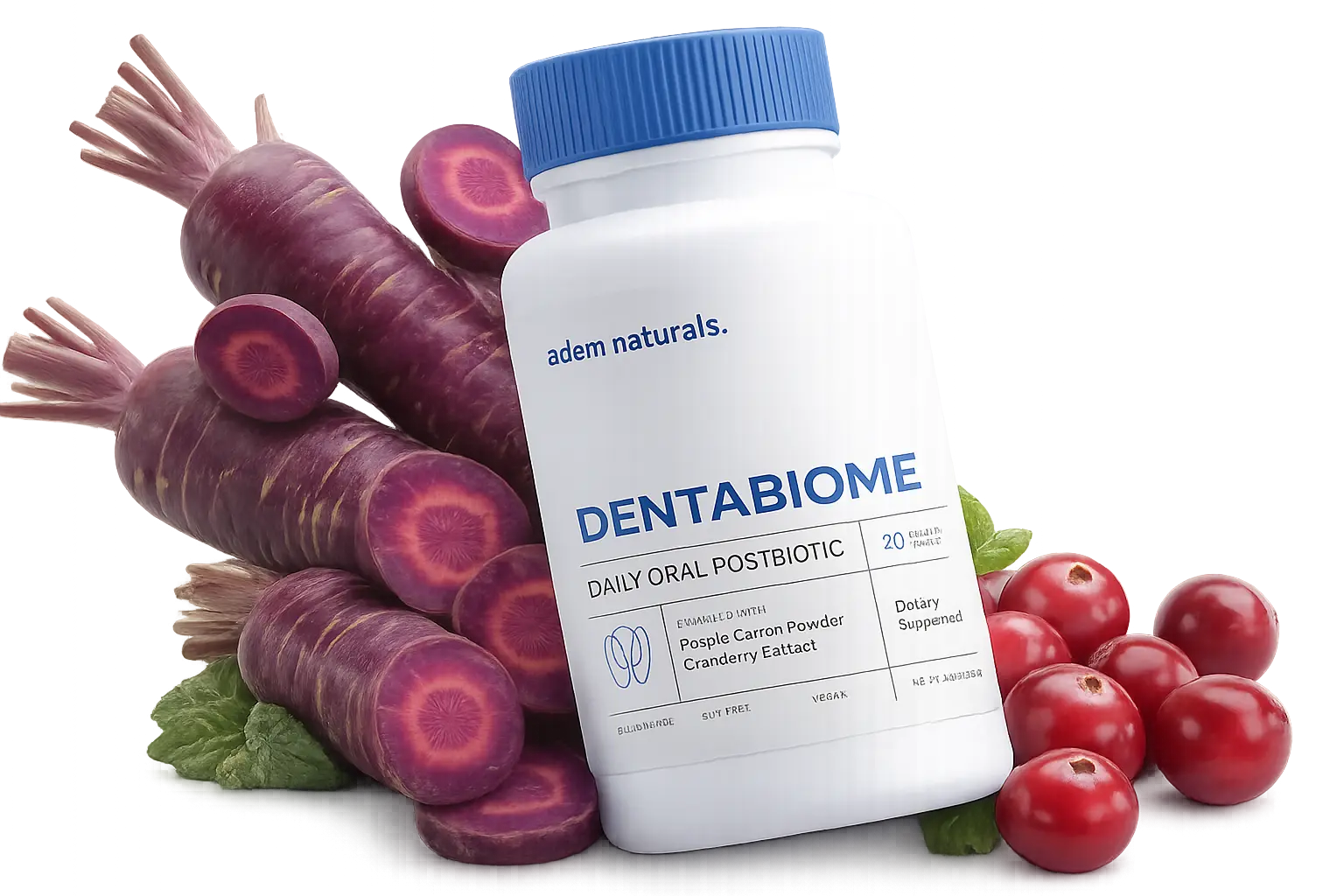
Formula
DentaBiome Ingredients: What's Inside Every Tablet?
DentaBiome's ingredient list is built around seven components: two postbiotic Lactobacillus strain groups, xylitol, cranberry extract, purple carrot powder, and an enzyme-supportive blend. Each DentaBiome component was selected for a specific, separately researched role in oral biofilm biology, explained one by one below.
Postbiotic Strain
L. Rhamnosus
Need: The mouth's bacterial community shifts toward disease-associated species when it becomes imbalanced. Something is needed to help nudge that balance back.
Why it's in DentaBiome: Lactobacillus rhamnosus has been studied for producing antimicrobial compounds that can inhibit cariogenic bacteria such as Streptococcus mutans, and for its capacity to compete with periodontal pathogens for space and nutrients in the oral cavity, which is the basis for including it in DentaBiome.
Verdict: A well-studied strain in oral microbiome research, mostly at the mechanistic and small-trial level rather than large-scale human outcome trials.
Enzyme-Supportive Blend
BioFresh Clean Complex
Need: Biofilm matrix is what lets plaque stick to enamel and resist rinsing or brushing; something has to work on that sticky scaffold itself, not just the bacteria inside it.
Why it's in DentaBiome: This blend is included alongside the cranberry and xylitol actives in DentaBiome to complement their documented effect on glucosyltransferase enzymes and biofilm matrix formation, the process cariogenic bacteria use to build insoluble plaque.
Verdict: A supporting complex rather than a standalone clinically-validated ingredient — its role is to work alongside the two evidence-backed actives (cranberry PAC and xylitol) rather than independently.
Sugar Alcohol
Xylitol
Need: Cariogenic bacteria like S. mutans depend on fermentable sugar to produce the acid that demineralizes enamel, so removing that fuel source is one of the most direct interventions available.
Why it's in DentaBiome: Xylitol is a five-carbon sugar alcohol that oral bacteria largely cannot ferment. Research has repeatedly shown xylitol reduces S. mutans levels in plaque and saliva, and a 2020 in vitro biofilm study found xylitol inhibited real-time biofilm formation and altered biofilm matrix structure. This is the best-documented ingredient in DentaBiome.
Verdict: The strongest evidence base in the DentaBiome formula, with decades of published clinical and lab research behind it at appropriate daily intake levels.
Anthocyanin Source
Purple Carrot Powder
Need: Gum tissue inflammation and oxidative stress accompany most plaque-related oral conditions, so an antioxidant source with a food-safe history was wanted for the formula.
Why it's in DentaBiome: Purple carrot powder is a concentrated source of anthocyanins, the same pigment class studied for antioxidant activity elsewhere in the diet. Worth noting for transparency: a 2006 FEMS Microbiology Letters study on cranberry-derived polyphenol fractions found that isolated anthocyanins showed little direct antibacterial effect on S. mutans compared to proanthocyanidins and flavonols, so purple carrot's role in DentaBiome is better understood as antioxidant and color support than a direct antibacterial agent.
Verdict: A reasonable antioxidant addition, but the direct anti-plaque evidence for anthocyanins specifically is thinner than for the formula's proanthocyanidin sources.
Polyphenol Extract
Cranberry Extract
Need: Something is needed to interfere with glucosyltransferase, the enzyme S. mutans uses to build the sticky glucan scaffold of dental plaque.
Why it's in DentaBiome: Cranberry proanthocyanidins (PAC) are the best-studied compound in DentaBiome for this job. A 2010 Caries Research study found cranberry PAC reduced S. mutans biofilm formation on saliva-coated surfaces and reduced caries severity in a rat model, an effect linked to PAC inhibiting glucosyltransferase (Gtf) activity and glycolysis.
Verdict: Strong in vitro and animal evidence for the Gtf-inhibiting mechanism; human clinical trial data on cranberry PAC specifically for caries outcomes is still limited.
Postbiotic Strain Pair
Dual-Strain L. Plantarum Complex
Need: Bad breath and gum irritation are commonly driven by specific bacteria (like Fusobacterium nucleatum) that produce volatile sulfur compounds, separate from the cavity-causing species above.
Why it's in DentaBiome: A 2024 double-blind randomized controlled trial found that Lactiplantibacillus plantarum CCFM1214, paired with a Ligilactobacillus salivarius strain, significantly lowered volatile sulfur compound levels and reduced F. nucleatum counts in participants with halitosis, which is the research basis for including an L. plantarum strain complex in DentaBiome.
Verdict: Backed by an actual human RCT on the strain pairing concept, though DentaBiome's exact postbiotic preparation was not itself the subject of that trial.