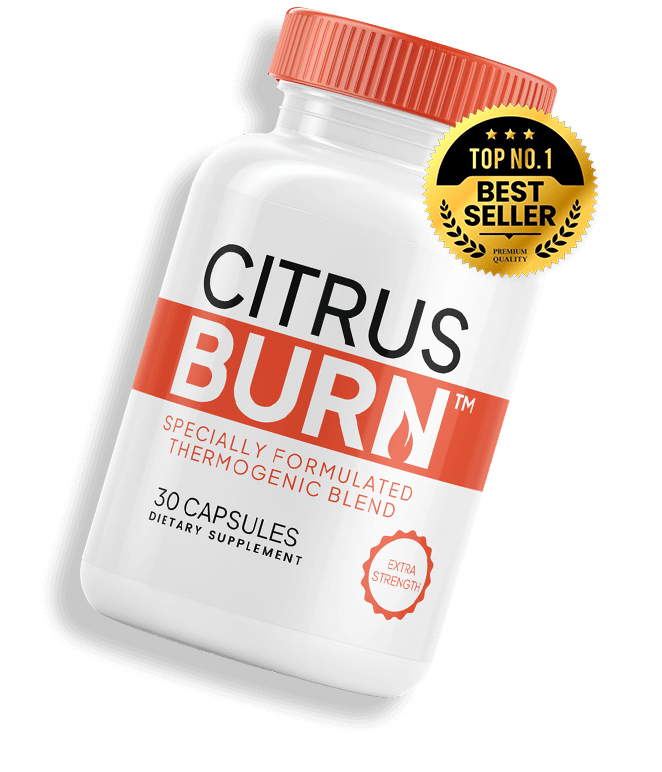
CitrusBurn supplement bottle with blue and white citrus-inspired label
Citrus-Powered Formula

CitrusBurn

A seven-ingredient look at nutrition, energy, and active living

CitrusBurn combines Seville orange peel, Spanish red apple vinegar, red pepper extract, mountain ginger, green tea extract, berberine, and Korean red ginseng into one stimulant-light formula built around metabolism, steady energy, and everyday activity — not a single miracle compound.

Educational content. Individual results vary. This statement has not been evaluated by the FDA.

At A Glance

What Is CitrusBurn's Quick Overview?

CitrusBurn is a seven-ingredient capsule formula centered on citrus-derived and botanical compounds studied for metabolism, appetite, and energy support, meant to be paired with a normal diet and activity routine rather than used on its own.

Formula typeStimulant-light metabolism and energy support capsules
Core ingredientsSeville orange peel, Spanish red apple vinegar, red pepper extract, mountain ginger, green tea extract, berberine, Korean red ginseng
Primary focus areasFat oxidation support, appetite regulation, blood sugar balance, steady energy
Stimulant contentNo added synthetic stimulants; contains naturally occurring p-synephrine and trace caffeine from green tea extract
Suggested pairingBalanced diet and regular physical activity, as used in the underlying ingredient research
Label specificsExact dosages, capsule count, and manufacturing details are listed on the official CitrusBurn product label
The Basics

What Is CitrusBurn?

CitrusBurn is a dietary supplement that blends seven plant-derived ingredients, led by Seville orange peel, into a single daily formula aimed at metabolism and energy support. It is sold as a capsule supplement, not a drug, and like all dietary supplements in the United States, it has not been evaluated by the FDA for the claims made about it.

Each ingredient in CitrusBurn has its own body of published research, summarized in the sections below. What has not been independently tested is the finished CitrusBurn blend itself, at its specific doses and ratios — that is normal for multi-ingredient supplements, but it's worth knowing the difference between "the ingredients are researched" and "this exact product has been through a clinical trial."

Why It's Built This Way

Why Does This CitrusBurn Formula Stand Out?

CitrusBurn stands out for combining several different mechanisms — fat oxidation, appetite regulation, and glycemic balance — instead of leaning on one stimulant. That multi-pathway design mirrors how researchers typically study metabolic support: not as a single switch, but as several modest, complementary effects working together.

None of the seven ingredients in CitrusBurn are exotic or unstudied; each has years of published research, discussed with real citations in the research section below, including its limitations.

The Formula

What's Inside CitrusBurn, And What Does Each Ingredient Do?

CitrusBurn's seven ingredients each target a different piece of metabolic health. Below, each one is broken down by what it needs to do, why it's in the formula, and an honest verdict based on the published research.

What Does Seville Orange Peel Do In CitrusBurn?

Seville orange peel supplies p-synephrine, a compound studied for activating fat cells' beta-3 adrenergic receptors to trigger lipolysis, the process of breaking down stored fat for energy, and for producing a small, measurable rise in resting metabolic rate. It's included in CitrusBurn as the formula's primary metabolic driver.

The need: a way to nudge fat oxidation without the jitteriness associated with ephedrine-type stimulants. Why it's here: p-synephrine is structurally related to adrenaline but is generally described in the literature as having a milder cardiovascular profile at standard doses, per a review in the Journal of the Society for Experimental Biology and Medicine. The verdict: real, but modest — and not risk-free. That same review noted synephrine can raise blood pressure and heart rate, and citrus peel compounds can inhibit an enzyme (CYP3A4) that many prescription drugs rely on for metabolism, so this is the ingredient to flag with a doctor if you take medication or have a heart condition.

Verdict: Meaningful fat-oxidation mechanism with a genuine cardiovascular caution attached — best suited to healthy adults without stimulant sensitivity or heart conditions.

What Does Spanish Red Apple Vinegar Do In CitrusBurn?

Spanish red apple vinegar provides acetic acid, which slows gastric emptying and appears to modestly lower the hunger hormone ghrelin, both of which can help you feel full longer after a meal. It's included in CitrusBurn as the formula's primary appetite-support ingredient.

The need: reduce the urge to over-snack between meals without a stimulant-driven appetite suppressant. Why it's here: a 2018 randomized trial in the Journal of Functional Foods found that apple cider vinegar combined with a calorie-restricted diet reduced appetite scores, body weight, and waist measurements more than diet alone. The verdict: the effect is real but should be kept in perspective — Mayo Clinic's own review of the evidence notes that experts haven't found meaningful long-term weight or hunger control from vinegar alone, and that many trials are small.

Verdict: A legitimate, low-risk satiety aid best treated as a mild assist, not a primary weight-loss driver.

What Does Red Pepper Extract Do In CitrusBurn?

Red pepper extract supplies capsaicinoids, compounds shown in a pooled analysis of 13 placebo-controlled trials to raise resting metabolic rate by roughly 34 kcal per day and modestly increase fat oxidation. In CitrusBurn, it's included to support diet-induced thermogenesis after meals.

The need: a small, consistent post-meal calorie-burn boost that keeps energy steady rather than spiking it. Why it's here: capsaicinoids activate the TRPV1 receptor, a pathway linked to increased energy expenditure and fat oxidation in several systematic reviews, including one published in Scientific Reports. The verdict: the metabolic rate increase is statistically real but small in absolute terms — a genuine, low-drama contributor rather than a headline effect.

Verdict: Consistent, well-replicated, and modest — exactly what the research supports, no more.

What Does Mountain Ginger Do In CitrusBurn?

Mountain ginger contains gingerols, compounds studied for supporting healthy blood sugar levels, easing digestion, and calming post-meal GI discomfort. In CitrusBurn, it's included to help smooth out blood sugar swings that can otherwise trigger cravings.

The need: steadier glucose response and better digestion so hunger feels less erratic. Why it's here: a meta-analysis in a 2016 systematic review found ginger supplementation significantly reduced fasting blood glucose and HbA1c across pooled trials, though a later 2024 meta-analysis found no significant effect on fasting glucose — the evidence is genuinely mixed. The verdict: ginger's digestive benefits are well established; its blood-sugar effects are promising but inconsistent across studies.

Verdict: Reliable for digestion, plausible but unsettled for blood sugar — an honest, supportive role rather than a proven glucose-control agent.

What Does Green Tea Extract Do In CitrusBurn?

Green tea extract supplies catechins, especially EGCG, which are believed to prolong the activity of norepinephrine and support fat oxidation and energy expenditure. In CitrusBurn, it's included as a clean-energy and antioxidant component that works alongside orange peel's thermogenic effect.

The need: sustained, non-jittery energy plus antioxidant support. Why it's here: a 2012 Cochrane review of 14 trials found green tea preparations produced a small but statistically significant weight reduction of about 0.95 kg versus placebo, and effects tend to be larger when catechins are combined with a little caffeine. The verdict: one of the better-studied ingredients in the formula, with consistent — if modest — results across more than 50 controlled trials.

Verdict: Solid, well-replicated evidence for small fat-oxidation and antioxidant benefits.

What Does Berberine Do In CitrusBurn?

Berberine is a plant alkaloid studied extensively for helping the body use blood sugar more efficiently, largely by activating an enzyme called AMPK. In CitrusBurn, it's included to support healthy glucose metabolism and reduce the energy crashes tied to blood sugar swings.

The need: steadier insulin and glucose handling to reduce cravings and energy dips. Why it's here: a 2021 meta-analysis of 46 randomized trials found berberine significantly reduced fasting glucose, HbA1c, and insulin resistance markers, with effects sometimes comparable to standard glucose-lowering approaches. The verdict: one of the more rigorously studied ingredients here, but also one of the more interaction-prone — berberine affects the same liver enzymes as many prescription drugs.

Verdict: Strong glycemic research backing, paired with a real need for medication-interaction caution.

What Does Korean Red Ginseng Do In CitrusBurn?

Korean red ginseng contains ginsenosides, compounds studied for reducing physical fatigue, lowering exercise-related blood lactate, and supporting steady exertion over time. In CitrusBurn, it's included as the formula's stamina and recovery ingredient.

The need: support for staying active without a stimulant crash. Why it's here: an 8-week randomized, double-blind, placebo-controlled trial published in the Journal of Ginseng Research found Korean red ginseng significantly lowered subjective fatigue ratings and post-exercise blood lactate compared to placebo. The verdict: the anti-fatigue signal is consistent across several small-to-moderate human trials, though larger, more diverse trials are still limited.

Verdict: Encouraging, consistent fatigue-reduction evidence from a well-established traditional ingredient.
Mechanism

How Does CitrusBurn Actually Work In The Body?

CitrusBurn is built around three overlapping pathways rather than one single mechanism. Understanding each pathway makes it easier to judge what the formula can realistically do — and what it can't.

Pathway 1

Thermogenesis & Fat Oxidation

Seville orange peel's p-synephrine, red pepper's capsaicinoids, and green tea's catechins each independently nudge the body toward burning more fat for fuel — through beta-adrenergic activation, TRPV1 receptor stimulation, and prolonged norepinephrine activity, respectively. Individually, each effect is modest (a small rise in resting metabolic rate, a slightly lower respiratory quotient during exercise). Stacked together in CitrusBurn, the working theory is that these small, mechanistically distinct nudges are additive — though that additive assumption has not been tested for this specific blend.

Pathway 2

Appetite & Glycemic Regulation

Spanish red apple vinegar slows gastric emptying and may modestly reduce ghrelin, the hunger hormone, while berberine and mountain ginger work on the blood-sugar side — supporting insulin sensitivity and smoothing post-meal glucose spikes. Because sharp glucose swings are a major trigger for cravings, this pathway is aimed less at suppressing appetite outright and more at preventing the blood-sugar crashes that cause it.

Pathway 3

Energy & Recovery Support

Korean red ginseng's ginsenosides are studied for reducing subjective fatigue and post-exertion blood lactate, helping sustain activity levels without relying on stimulant-driven energy. Combined with green tea's mild natural caffeine content, this pathway is designed to support consistent daily energy rather than a short-lived spike and crash.

Weighing It Up

What Are CitrusBurn's Pros And Cons?

No supplement is without trade-offs. Here's a balanced look at what CitrusBurn has going for it, and where the research falls short.

Pros

  • All seven ingredients have individual published human research behind their mechanisms
  • No synthetic stimulants or ephedra-derived compounds in the formula
  • Targets three distinct pathways (thermogenesis, appetite, energy) instead of one
  • Several ingredients (green tea, berberine, ginger) have well-replicated safety profiles at standard doses

Cons

  • The finished CitrusBurn blend has not been independently clinically trialed as a whole
  • Individual ingredient effect sizes are consistently described as modest, not dramatic
  • Seville orange peel and berberine both carry real drug-interaction and cardiovascular caveats
  • Results in the underlying research took 8–12 weeks and required diet and exercise changes alongside supplementation

Where To Buy CitrusBurn

CitrusBurn is sold through its official website. Buying directly is the most reliable way to confirm you're getting the labeled formula, current pricing, and any manufacturer guarantee.

Visit Official Website
Read This First

What Side Effects And Safety Issues Should You Know About CitrusBurn?

CitrusBurn's ingredients are generally well tolerated at standard doses, but two of them — Seville orange peel and berberine — carry real, documented cautions that are worth reading before you buy, especially if you take medication or have a heart condition.

Known cautions from the published research

  • Seville orange peel (p-synephrine): can raise blood pressure and heart rate in sensitive individuals, and its compounds can inhibit the CYP3A4 liver enzyme, which may raise blood levels of many prescription drugs.
  • Berberine: commonly causes mild GI upset (bloating, cramping) and can interact with diabetes medication, blood thinners, and other drugs metabolized through the same liver pathways.
  • Apple cider vinegar: undiluted or high-dose use can irritate the throat and erode tooth enamel over time.
  • Ginger: generally well tolerated, though high doses have been associated with mild heartburn in some studies.
  • Red pepper extract: can cause GI discomfort in people with sensitive stomachs or reflux.
  • Korean red ginseng: may affect blood sugar and interact with blood-thinning medication.

Who should check with a doctor first

Anyone who is pregnant or nursing, has high blood pressure, arrhythmia, or another cardiovascular condition, takes prescription medication (especially blood thinners or diabetes medication), or has an upcoming surgery should talk to a healthcare provider before starting CitrusBurn.

This product has not been evaluated by the Food and Drug Administration. This product is not intended to diagnose, treat, cure, or prevent any disease. This page is for educational purposes and is not medical advice.
Common Questions

CitrusBurn FAQs

Is CitrusBurn safe to take?

Whether CitrusBurn is safe to take depends on your individual health status. Its ingredients are generally recognized as safe at standard doses, but Seville orange peel and berberine both carry documented cautions around blood pressure and drug interactions, so anyone with a heart condition, on medication, or pregnant should check with a doctor before taking CitrusBurn.

Does CitrusBurn contain stimulants?

CitrusBurn does not contain synthetic stimulants, but it isn't entirely stimulant-free either — it contains naturally occurring p-synephrine from Seville orange peel and trace caffeine from green tea extract, both of which can have mild stimulant-like effects for sensitive users.

How long does it take to see results from CitrusBurn?

How long it takes to see results from CitrusBurn will vary by person, but the clinical research behind its individual ingredients generally measured changes over 8 to 12 weeks of consistent use alongside normal diet and exercise, not overnight.

Can I take CitrusBurn with medication?

You should ask a pharmacist or doctor before taking CitrusBurn with medication, because Seville orange peel and berberine can both interact with drugs processed through the same liver enzymes, including some blood pressure, blood-thinning, and diabetes medications.

Has CitrusBurn itself been through clinical trials?

CitrusBurn itself, as a finished combined formula, has not been through independent clinical trials — what has been studied is each individual ingredient on its own, which is the normal state of evidence for most multi-ingredient supplements.

Who should avoid CitrusBurn?

People who should avoid CitrusBurn include those with high blood pressure or heart arrhythmia, anyone pregnant or nursing, anyone under 18, and anyone with a bleeding disorder or upcoming surgery, unless a doctor has specifically cleared it.

The Evidence

What Does The Published Research Actually Show?

Here is a closer look at the strongest studies behind CitrusBurn's ingredients, including where the evidence is solid and where it's still mixed.

Bitter orange and p-synephrine

A 2004 review in the Journal of the Society for Experimental Biology and Medicine examined synephrine's lipolytic activity and cardiovascular safety profile, concluding that effects on human fat cells occur mainly at higher doses and that cardiovascular caution is warranted given synephrine's structural similarity to epinephrine.

Apple cider vinegar and appetite

A 2018 randomized clinical trial in the Journal of Functional Foods (Khezri et al.) found that 30 mL of apple cider vinegar per day, combined with a calorie-restricted diet, significantly reduced body weight, BMI, hip circumference, and appetite scores compared to diet alone over 12 weeks.

Capsaicinoids and resting metabolic rate

A systematic review and meta-analysis of 13 placebo-controlled trials found capsaicinoid supplementation significantly raised resting metabolic rate by about 34 kcal per day and improved fat oxidation, though the researchers described the clinical impact as moderate rather than dramatic.

Ginger and blood sugar

A 2016 systematic review and meta-analysis in a peer-reviewed nutrition journal found ginger supplementation significantly reduced fasting blood glucose and HbA1c; however, a more recent 2024 meta-analysis found no significant effect on fasting blood sugar, underscoring that the evidence for this specific benefit remains mixed.

Green tea catechins and body weight

A widely cited 2012 Cochrane systematic review of 14 randomized trials found green tea preparations produced a small but statistically significant weight reduction of roughly 0.95 kg compared to placebo, with larger effects generally seen in trials combining catechins with caffeine.

Berberine and glycemic control

A 2021 systematic review and meta-analysis of 46 randomized controlled trials found berberine significantly reduced HbA1c, fasting plasma glucose, and insulin resistance markers in people with type 2 diabetes, with effect sizes the authors described as clinically meaningful.

Korean red ginseng and fatigue

An 8-week randomized, double-blind, placebo-controlled trial published in the Journal of Ginseng Research found Korean red ginseng supplementation significantly reduced subjective physical fatigue and post-exercise blood lactate compared to placebo, with no adverse safety findings reported.